Tag: Parenting

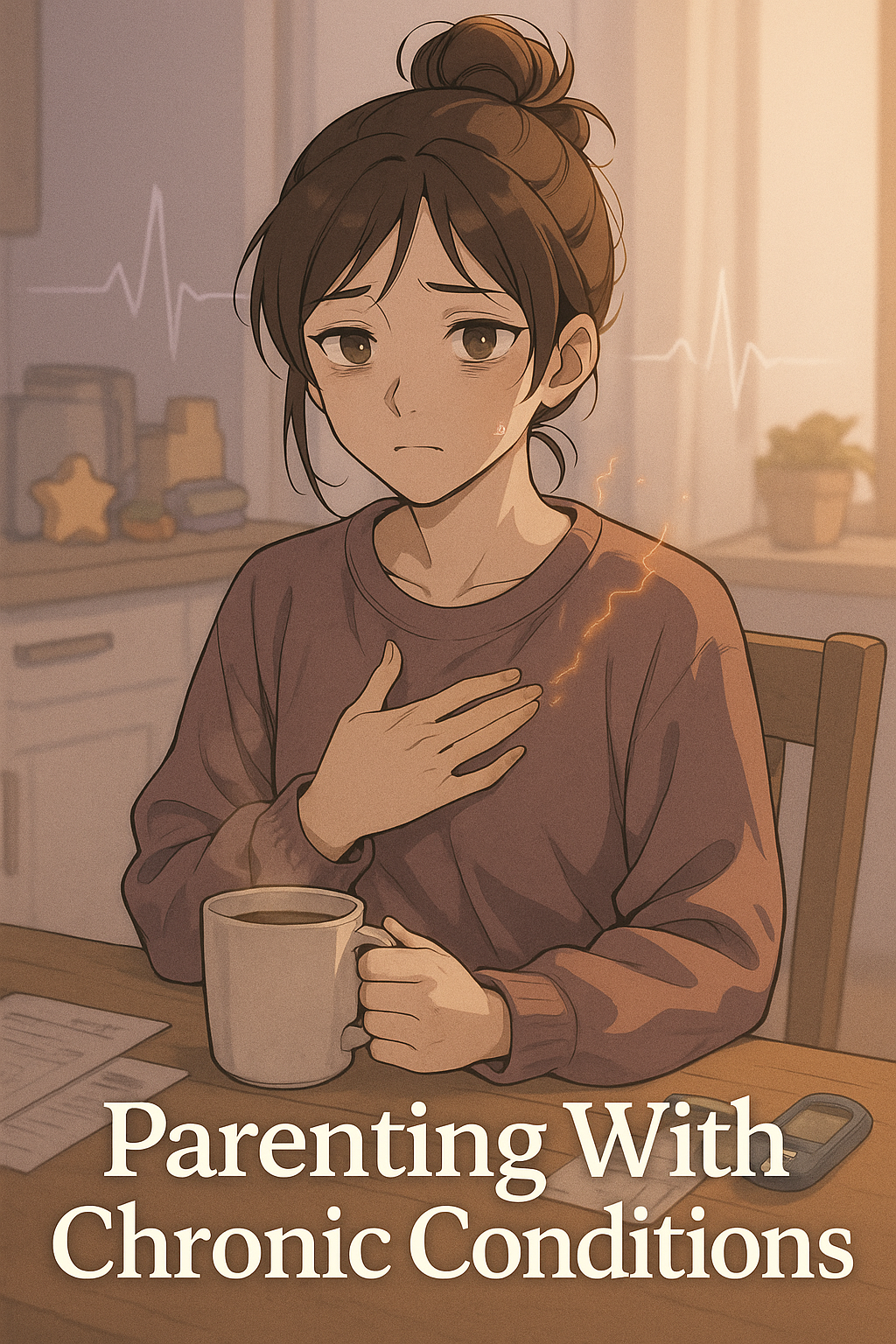
  • Parenting With Chronic Conditions: How I Survive the Hard Days Without Falling Apart

    Parenting With Chronic Conditions: How I Survive the Hard Days Without Falling Apart

    Trigger Warning:

    This post talks about chronic symptoms, stress, anxiety, and the struggles of parenting while unwell.

    Disclaimer:

    I’m not a medical professional. This post shares personal experiences and tips that help me. Always talk to your doctor before making changes to your health routine.

    Let me just say it straight:
    Trying to parent while dealing with chronic conditions should count as an Olympic sport.
    I swear I’d have a gold medal by now, probably two.

    Because it’s not just being tired or having a bad day.
    It’s waking up with a tight chest, a blood sugar rollercoaster, a head that feels too heavy, and still hearing,
    “Mom, what’s for breakfast?”
    before your eyes even fully open.

    And somehow… you keep going.

    Not because it’s easy, but because there’s literally no other choice.


    The Invisible Battle Nobody Sees

    If you know, you know.

    People see you grocery shopping with kids like,
    “Oh wow, you’ve got your hands full!”
    and you smile, but inside you’re thinking:

    “If only you knew I’m low-key trying not to pass out in aisle five while also calculating carbs for dinner and praying this weird shoulder pinch isn’t something fatal.”

    It’s wild — the amount of mental gymnastics you do just to keep life moving.

    And the worst part?
    Most of it is silent.
    Invisible.
    Hidden under that “I’m fine” shield we’ve learned to wear because telling the truth feels like too much explaining.


    The Mental Load Hits Harder Than the Symptoms

    Let’s be honest — anxiety loves to join the party.
    It’s like your chronic condition says, “Let me cause a little chaos,”
    and anxiety comes in behind it like,
    “Bet. I’ll make it ten times worse.”

    And suddenly a little chest ache isn’t “just a chest ache.”
    It’s your brain whispering,
    “What if…?”
    until your whole nervous system goes into witness protection mode.

    Meanwhile your kids are arguing about who stole whose snack, someone’s tablet is dead, someone else is hungry again, and you’re trying to breathe through it like a monk even though your heart is doing jumping jacks.

    It’s A LOT.
    And yet—you keep showing up.

    Every. Single. Day.


    What Actually Helps (and doesn’t make me want to scream)

    Listen. I’m not here to pretend I have a perfectly color-coded routine with mason jars and yoga mats.
    This is what real survival looks like for me:

    💜 Micro-rests.

    Five minutes. In silence.
    Sometimes on the floor, the bathroom, the car—whatever.
    It resets my whole nervous system.

    💜 Simplifying breakfast.

    My body does MUCH better without a sugar bomb first thing in the morning.
    Eggs, oatmeal, and yogurt — my holy trinity.

    💜 Hydration first, fear later.

    I drink water and take my meds before letting my anxiety scroll through imaginary symptoms.

    💜 “Couch school.”

    Yes, we homeschool from the couch sometimes.
    Documentaries. Reading. Drawing.
    Learning doesn’t stop just because my body said, “Girl, sit down.”

    💜 Not pretending to be superwoman.

    If I need help?
    I take it.
    Is dinner easy?
    It’s easy.
    Rotisserie chicken has saved more families than therapy, honestly.


    One Thing I Wish More People Understood

    Parenting with chronic conditions isn’t weakness.
    It’s grit.
    It’s resilience.
    It’s the kind of strength that doesn’t look pretty—it looks tired and shaky and still trying.

    The kind of strength that sits through symptoms, fear, and fatigue…
    and still gets up to comfort a crying kid at 3 AM.

    The kind that keeps showing up even when your body is begging for a timeout.

    You don’t get enough credit for that.
    None of us do.


    A Little Story I Don’t Tell Often

    There was one day — not even that long ago — when my symptoms scared me so bad I had to sit on the edge of the bed just to steady my breathing.
    My chest felt tight, my anxiety was loud, and I swore something was wrong.

    And right in the middle of that moment, my child walked in and said,
    “Mom, can you help me with this?”
    Holding homework.

    And somehow, even while terrified, I helped.
    My hands were shaking, but I helped.

    Later that night, I realized something:
    Our kids don’t need the healthiest version of us.
    They need the present version of us.
    The trying version.
    The “I’m still here even though today was heavy” version.

    And that version—you—is already enough.


    If You’re Doing This Too, Here’s What I Want You to Know

    You’re not dramatic.
    You’re not weak.
    You’re not failing.
    You’re navigating life with an extra layer of difficulty that most people will never understand.

    And you’re still raising a family.
    Still showing up.
    Still trying to heal.
    Still fighting for better days.

    That’s strength most people won’t ever have.


    Parenting with chronic conditions doesn’t make you less.
    It makes you dangerous — in the best way.
    Because anyone who can survive their own body and raise kids is built different.

    Soft mic-drop. 💜
  • When the Calm Breaks: Parenting Through a Panic Storm

    When the Calm Breaks: Parenting Through a Panic Storm

    Trigger Warning: Panic, Anxiety, Mental Health
    Disclaimer: This is a personal reflection and not medical advice.

    This morning I woke up on empty.
    Not physically. I slept maybe four hours but emotionally, spiritually, mentally… I was drained before the day even started.

    Anxiety hit fast.
    No trigger. No warning. Just that rush in my chest, that nervous buzzing in my stomach like something awful was about to happen. My first instinct? Cry. Scream. Hide. I wanted to escape my own skin.

    But I didn’t shut down completely.

    I tried.
    God, I tried.

    I prayed.
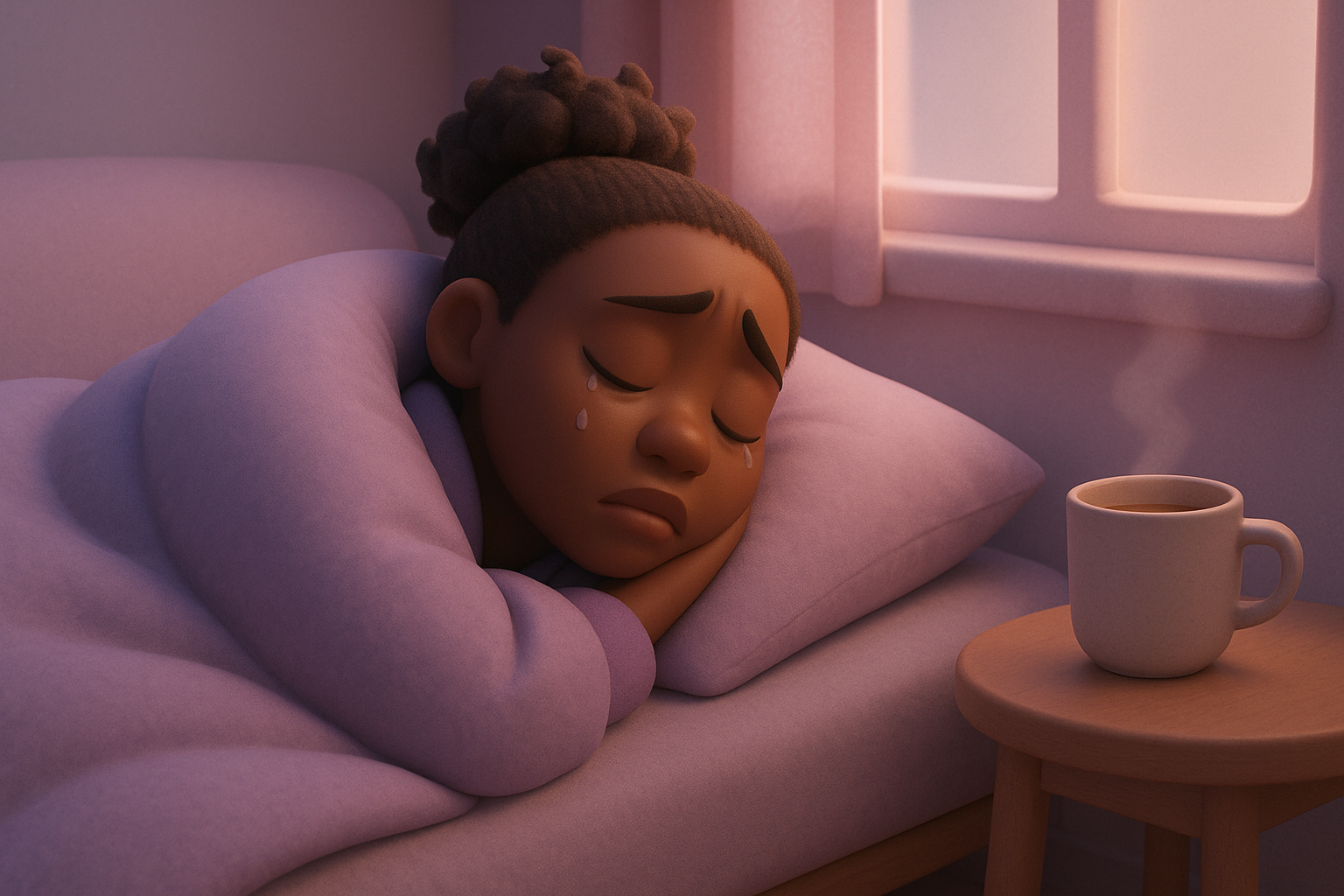
    I stayed under the weighted blanket, telling myself over and over, “You’re okay. This is just anxiety. You’ve felt this before. You will not die.”

    I wanted to take something to calm down, but fear crept in: What if it makes things worse? What if my body reacts?
    So instead, I leaned into what I could do.


    My mom helped the kids this morning.
    My husband stepped in. Not just physically, but emotionally.

    He sat with me.
    He massaged my shoulders and my back, slow and gentle just enough pressure to remind me I was still here, still safe. He offered distractions:
    “Want to play a game?”
    “Wanna scroll and find something funny?”
    “Try this it’s lemon. The sour might shock your senses.”

    And it did help not all at once, but enough to interrupt the spiral.

    I still felt shaky. Still felt like I couldn’t breathe deep. Still felt that heavy, horrible “what if” voice whispering that something was wrong with me.
    But I kept trying.

    I drank water.
    I got up to pee even though I didn’t want to move.
    I talked. I cried. I let him hold me.
    And even though I didn’t feel instantly better, I reminded myself that surviving the storm is enough.


    Anxiety doesn’t care if you have kids.
    It doesn’t care if you had a good day yesterday.
    It doesn’t care if your life is finally starting to feel like it’s in order.

    But I do.

    I care.
    About healing. About showing up. About doing whatever it takes to not let this monster win.

    So today, if you’re reading this under your own weighted blanket, if you’re gripping your chest trying to figure out if it’s anxiety or something worse I want you to know:

    You’re not failing.
    You’re fighting.
    And that matters.

    Even when it doesn’t feel like progress it is.

    You got out of bed. You asked for help. You’re reading this.

    That’s effort.
    That’s resilience.
    That’s you, still here.

  • A Heartfelt Letter to Anxious Moms for Mother’s Day

    A Heartfelt Letter to Anxious Moms for Mother’s Day

    A Peaceful Letter to Anxious Moms on Mother’s Day

    ⚠️ Trigger Warning: This post gently touches on anxiety, motherhood, and emotional vulnerability.
    📌 Disclaimer: I’m not a mental health professional — just a mom sharing her heart.

    Somewhere right now, a mom is holding a cup of cold coffee, mentally making five lists while wiping away tears she hasn’t told anyone about.

    And if that mom is you — this is your reminder:
    💜 You’re doing more than enough.
    💜 You’re already worthy.
    💜 And you deserve peace today, too.


    💐 Today, Let’s Pause

    Mother’s Day isn’t just about perfect pictures or gift bags with fancy bows.
    It’s about moments like:

    • Quiet breathing before the house wakes up
    • Tiny hands hugging you tighter than usual
    • Letting yourself rest without guilt
    • Laughing even though you cried last night

    🌿 You’re Still a Good Mom If…

    • You need breaks
    • You say “not right now”
    • You don’t love every moment
    • You’re healing while parenting
    • You cry and show up anyway

    Anxiety doesn’t erase your love.
    It just makes you more intentional about holding on to the good.


    💌 A Love Letter to Moms Like Us

    To the mom with the full heart and tired spirit —
    I see you.

    You are the safe place.
    The breath of calm during the storm.
    The reason someone feels deeply loved.

    And even on the days when you don’t feel “together”…
    your presence is still a gift.


    🧘‍♀️ A Simple Practice for Today:

    Take 3 deep breaths.
    Hand on your heart.
    Say:

    “I am enough. Right now. Just as I am.”
    “I don’t have to do it all today.”
    “I deserve peace, too.”


    💜 Wishing You a Gentle, Peaceful Mother’s Day

    If today feels joyful — soak it up.
    If today feels hard — breathe through it.
    Either way, you are loved, seen, and appreciated.

    Happy Mother’s Day 💐
    From one anxious mom to another.

    — Shanice, Anxiety Momster

  • Breaking the Stigma: How I Talk to My Kids About Anxiety and Mental Health

    Breaking the Stigma: How I Talk to My Kids About Anxiety and Mental Health

    Anxiety isn’t a quiet thing in our home.
    It’s not hidden behind closed doors or swept under the rug.
    We talk about mental health openly — because in this family, it’s not taboo. It’s real. It’s personal.

    As a mom who lives with severe anxiety and panic attacks, I made a promise to myself: my children would never feel ashamed or confused about what they’re feeling inside. So we talk. Even when it’s hard. Especially when it’s hard.

    Supporting a Child Through Panic Attacks

    My 13-year-old experiences panic attacks that stop her in her tracks — chest tightness, racing thoughts, tears, and fear that something is terribly wrong. I’ve seen her clutch her chest and cry, “I can’t breathe.”

    I’ve been there too.

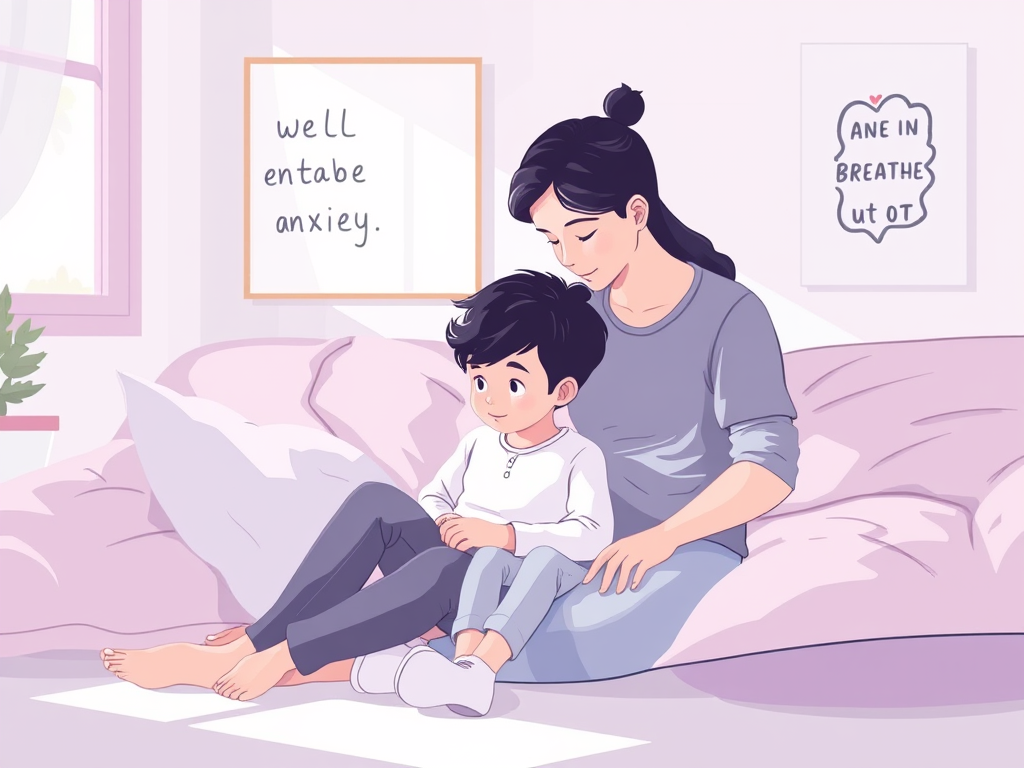
    In those moments, I don’t try to fix her. I sit with her.
    We breathe together:

    • Inhale for 4 seconds
    • Hold for 4 seconds
    • Exhale for 6 seconds

    Over and over, until the panic eases.

    This is how we manage anxiety as a family. This is what it looks like — connection, calm, and compassion.

    Teaching Kids How to Cope with Anxiety

    We’re not just helping our teen — even our youngest is learning.

    My 4-year-old doesn’t fully understand the word “anxiety,” but she knows how to breathe in and out when someone’s upset. She’s seen it in action. Now, she’ll walk up and say, “Breathe with me,” to her older siblings when they’re frustrated.

    She’s learning early what most of us didn’t learn until adulthood —
    your emotions matter, and you’re not alone.

    Why Talking About Mental Health Matters in Parenting

    Breaking the mental health stigma starts at home. In our house, we use words like:

    • Triggered
    • Overwhelmed
    • Calm down space
    • Grounding
    • Anxiety attack

    We don’t say “stop crying.” We don’t say “you’re being dramatic.”
    We validate, support, and walk through it together.

    How to Start Mental Health Conversations With Your Kids

    If you’re not sure where to begin, here’s what’s helped us:

    • Be honest — Let them know it’s okay to feel anxious or scared.
    • Share your own experience (in age-appropriate ways).
    • Practice breathing exercises as a family — even when no one is anxious.
    • Create a calm corner or safe space where kids can retreat and reset.
    • Use children’s books or videos to explain what anxiety feels like.
    • Normalize mental health days the same way we do sick days.

    We Get Through Anxiety Together — One Breath at a Time

    I won’t pretend it’s easy. Some days I feel like I’m barely hanging on. But even in the mess, I know this matters. Talking about anxiety with my kids has brought us closer. It’s helped them feel seen. And it’s helped me heal in ways I never expected.

    In this home, we breathe together. We cry together.
    And we show each other — you don’t have to go through anxiety alone.

    💬 Let’s Talk About It… Together

    If you’re a parent navigating anxiety — yours, your child’s, or both — you are not alone. This is hard, but you’re doing the best you can. And that is enough.

    ✨ Want extra support and free calming tools?
    Download my free Peace Over Panic Digital Journal and Anxiety Tracker — created from our real life, with love, for moms just like you.

    👉 Grab your free copy here
    ✨ Includes daily check-ins, weekly reflections, and breathing tools for tough moments.

    And if this post resonated with you, drop a comment, share it with a friend, or just breathe with me in spirit.

    We’re breaking the stigma, one breath and one honest conversation at a time.

    With love,
    Shanice – Anxiety Momster

Access calming tools, guided journals, and anxiety support

Get instant access to calming tools, journal prompts, and healing pages created for overwhelmed, overthinking souls — and join the Anxiety Momster newsletter for ongoing support, updates, and mental health resources.

💜 100% free. No pressure. Just peace.

You can unsubscribe anytime. For more details, review our Privacy Policy.