Tag: Panic disorder

  • Anxiety vs. Heart Attack: The Facts I Read When I Think It’s Fatal

    Anxiety vs. Heart Attack: The Facts I Read When I Think It’s Fatal

    Trigger Warning: This post discusses health anxiety, chest pain, and heart attack fears. Please take care of yourself while reading.

    Disclaimer: I am not a doctor. This is my personal experience living with anxiety. Nothing here is medical advice if you ever feel you are in danger, seek professional medical help immediately.


    When Anxiety Feels Like a Heart Attack

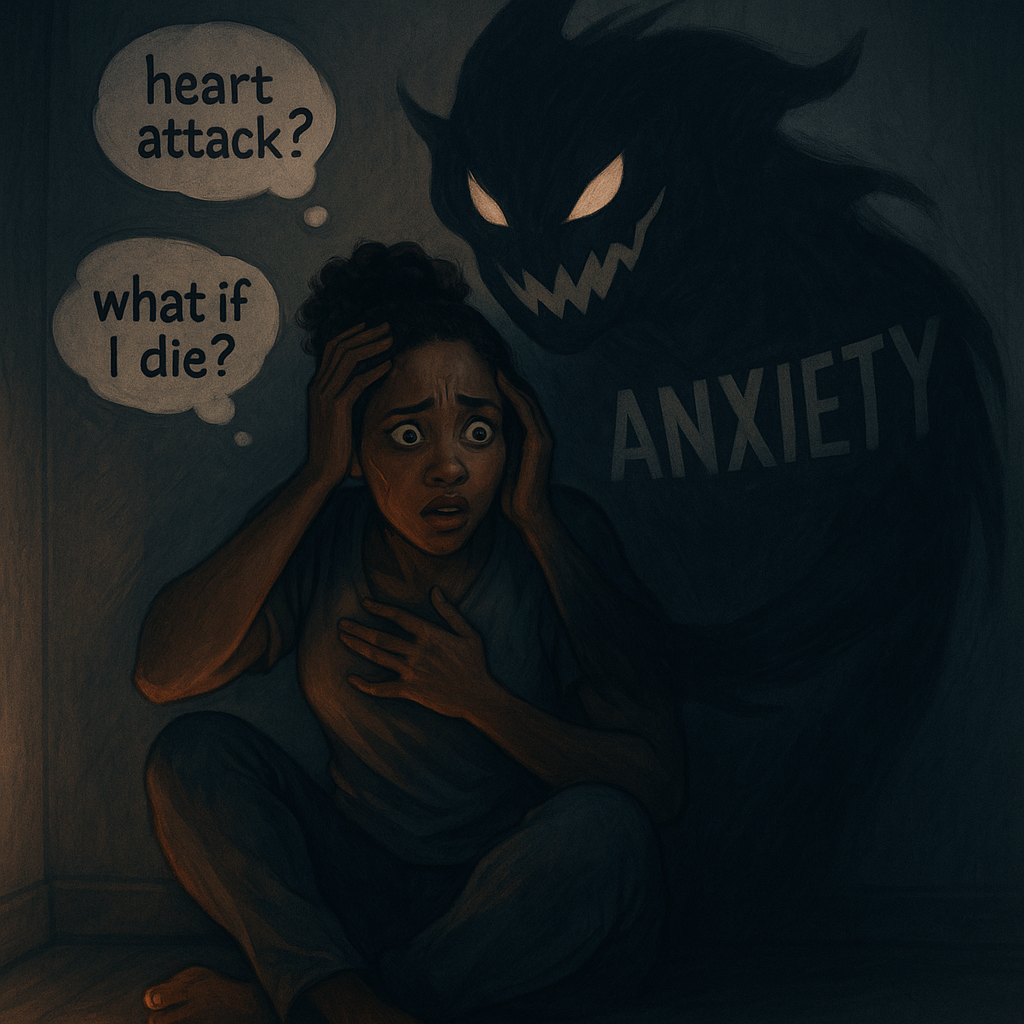
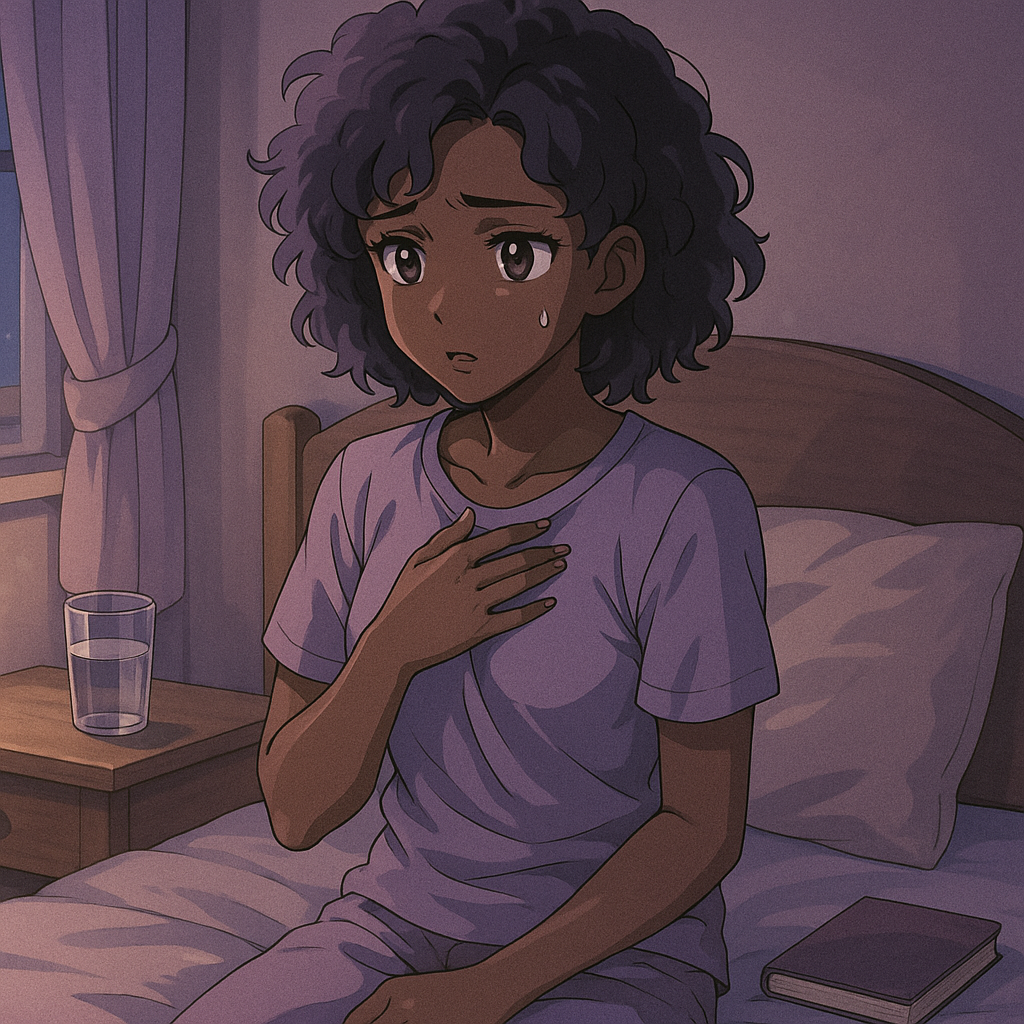
    There have been nights where I sat clutching my chest, convinced that any second would be my last. The pain was sharp, the fear was louder, and no amount of logic could convince me otherwise: “This has to be a heart attack.”

    Living with health anxiety means that every ache, every flutter, every breath feels like a warning sign. For me, the scariest spiral always starts in my chest.

    I’ve had moments of:

    • Sudden chest tightness that feels like my body is collapsing in on itself
    • A weird ache in my jaw or shoulder that makes me panic even more
    • Shortness of breath that’s really just me forgetting how to breathe normally
    • A racing heart that spikes out of nowhere and convinces me it’s all over

    And yet every single time I’ve made it through. Because what I was feeling wasn’t a heart attack… it was anxiety.


    Why Anxiety Mimics Heart Attack Symptoms

    Anxiety activates your body’s fight-or-flight response. Adrenaline floods your system. Muscles tighten. Breathing changes. Your heart pounds faster to “protect” you from danger — except the danger is just a thought.

    Here’s how anxiety tricks me (and maybe you too):

    • Chest Pain/Tightness → Anxiety causes muscle tension in your chest wall, making the pain feel real and scary.
    • Jaw or Shoulder Pain → Clenching from stress can radiate into these areas.
    • Shortness of Breath → Shallow breathing during panic makes you feel suffocated.
    • Heart Racing → Adrenaline surges send your pulse soaring, even if your heart is healthy.

    The overlap is cruel, because these are also signs of a heart attack. That’s why anxiety feels so believable.


    What I Remind Myself in the Middle of Panic

    Over time, I’ve built a little script in my head facts I repeat when my anxiety screams “heart attack.”

    • If the pain changes when I move, stretch, or press on it → it’s usually muscle, not my heart.
    • If it comes and goes in waves instead of staying crushing and constant → it’s more likely anxiety.
    • If deep breaths or grounding calm it down → that’s nerves, not blocked arteries.
    • If I’ve had this same symptom before and survived → it’s reassurance, not danger.

    These reminders don’t erase the fear instantly, but they keep me from spiraling into full-blown panic.


    How I Cope in the Moment

    When I’m in the middle of an anxiety spiral, here’s what helps me:

    1. Slow Breathing: Inhale for 4, hold for 4, exhale for 6. It helps reset my racing heart.
    2. Grounding: I press my hand to my chest and remind myself: this is tension, not danger.
    3. Movement: Stretching my shoulders and jaw often makes the “heart pain” fade.
    4. Distraction: Journaling, sipping water, or writing down what I’m feeling pulls me out of the fear loop.
    5. My Trackers: Logging symptoms helps me see patterns — proof that I’ve been through this before and survived.

    The Reassurance I Keep Coming Back To

    The scariest part of health anxiety is the “what if.” What if this time it’s not anxiety? What if I don’t make it?

    But here’s the truth: anxiety has never killed me. It just feels like it will.

    Every spike, every ache, every “this has to be it” moment has passed. My body has always corrected itself. The fear fades, my heart rate slows, and I’m left with proof that it was panic not a heart attack.


    If You’re Reading This While Panicking…

    Take a slow breath with me right now.
    Put your hand on your chest.
    Say this out loud:

    “This is my anxiety lying to me. My body knows how to calm down. I am safe.”

    You are not alone in this. I’ve been there more times than I can count. And every time, the anxiety eventually loosened its grip. Yours will too.


    This is just my personal experience, but maybe it helps you feel less alone. Anxiety is sneaky, cruel, and exhausting but it is not the end.

    If you want more tools to cope, I share free trackers and journals that help me manage spirals and see my progress over time. You can grab them here.

    You don’t have to go through this fight alone.
  • Feeling Like You’re Going Crazy? It Might Just Be Anxiety

    Feeling Like You’re Going Crazy? It Might Just Be Anxiety

    ⚠ Trigger Warning: This post discusses anxiety, intrusive thoughts, and mental health symptoms.
    Disclaimer: I’m not a medical professional. This is based on my personal experience with anxiety. Please seek professional advice if you’re struggling or unsure about your symptoms.

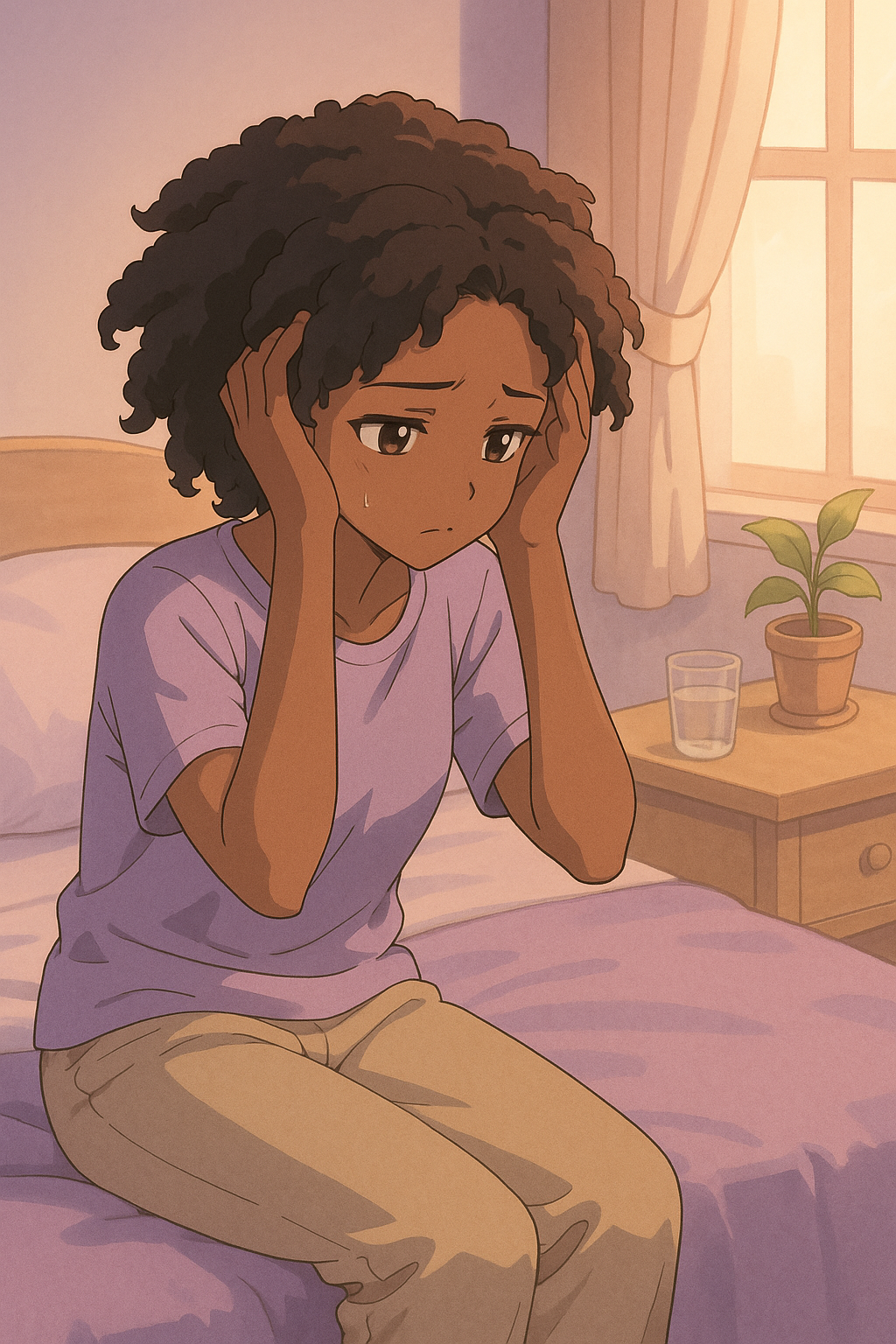
    Have you ever had that moment where your heart is pounding, your mind is racing, and you think:
    “I’m losing my mind. Something is seriously wrong with me.”

    I’ve been there — more times than I can count. And every single time, it felt so real.

    But here’s what I’ve learned through living with anxiety and panic attacks: Feeling like you’re going crazy doesn’t mean you actually are.


    Why Anxiety Can Make You Feel Like You’re Losing Control

    When anxiety spikes, it’s not just an emotional feeling — it’s a physical, full-body alarm system. Your brain senses a threat (even if there isn’t one) and kicks your nervous system into fight-or-flight mode.

    That response can cause:

    • Racing thoughts or intrusive thoughts
    • A sense of unreality or detachment (derealization)
    • Difficulty focusing or speaking
    • Feeling like you’re “not yourself”
    • Worry you might snap, faint, or lose touch with reality

    It’s terrifying, but it’s a symptom — not a sign you’re going insane.


    The Science Behind the ‘I’m Going Crazy’ Feeling

    Anxiety overloads your brain with adrenaline, making thoughts race faster than you can process them. At the same time, your body becomes hyper-aware of every sensation. That’s why your mind starts scanning for “proof” that something is wrong.

    Common triggers for this feeling:

    • Adrenaline surge — speeds up thinking until it feels overwhelming
    • Hyper-awareness — makes you notice every breath, heartbeat, or twitch
    • Fight-or-flight mode — convinces your body it’s in danger when it’s not

    This combination creates the perfect storm for thinking: “I’m losing control.”


    How to Ground Yourself When You Feel This Way

    1. Label it: Say to yourself, “This is anxiety, not danger.”
    2. Engage your senses: Try the 5-4-3-2-1 grounding exercise.
    3. Slow your breathing: Inhale for 4, exhale for 6–8.
    4. Shift your focus: Distract your brain with a neutral activity — folding laundry, watching a light show, playing a game.

    Important Reminder

    You are not crazy. You are having a normal human reaction to an overactive nervous system. If you’ve felt this before and came out the other side — you can do it again.

    The fact that you’re aware of your thoughts means you are still grounded in reality. Anxiety can feel powerful, but it’s not more powerful than you.


    💬 Let’s Talk: Have you ever felt like you were losing your mind when it was actually anxiety? Share your story in the comments — it might help someone else feel less alone.

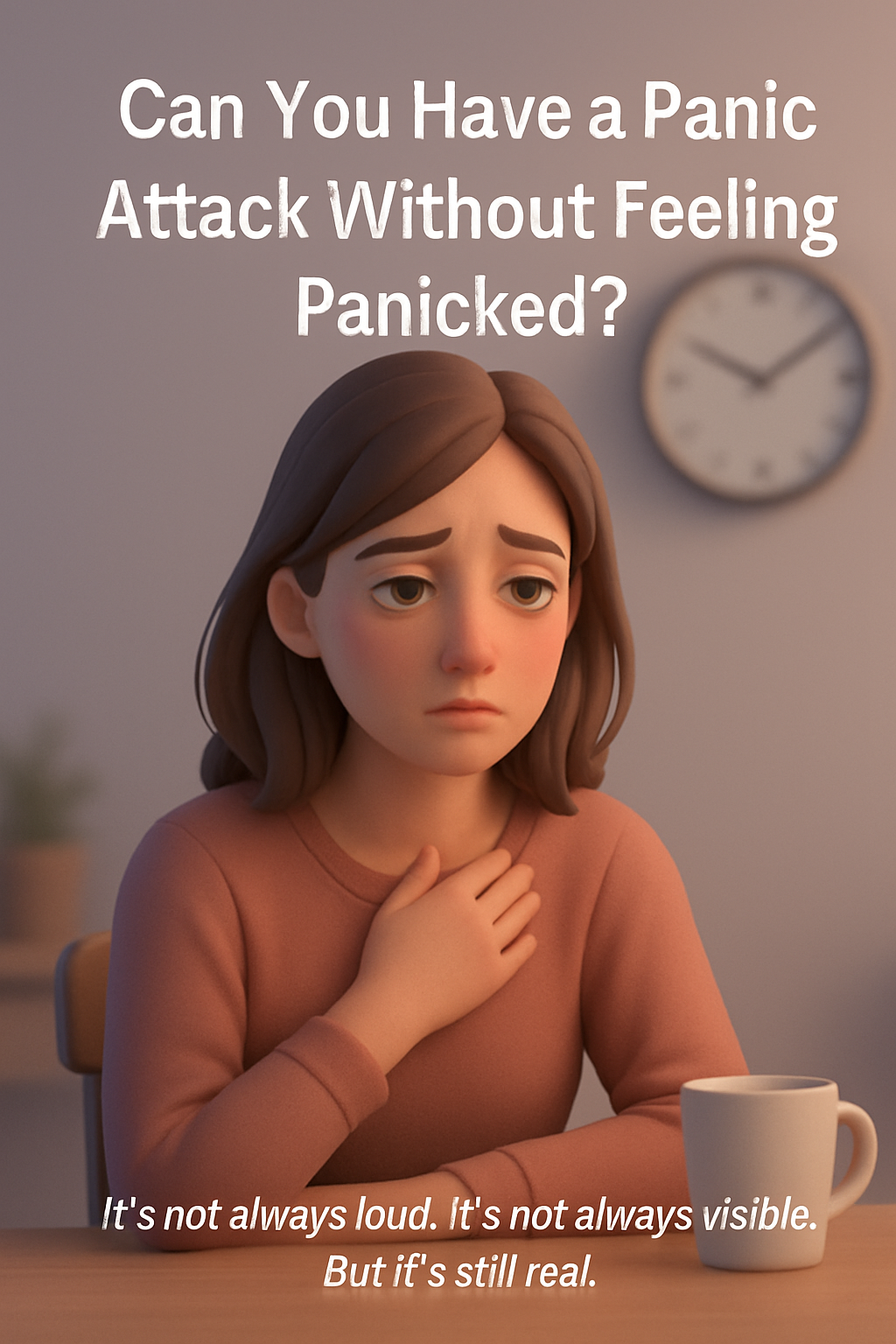
  • Can You Have a Panic Attack Without Feeling Panicked?

    Can You Have a Panic Attack Without Feeling Panicked?

    ⚠️ Trigger Warning:

    This post discusses panic attacks, dissociation, and physical anxiety symptoms. If you’re in a sensitive headspace, read gently and take breaks.


    💬 Disclaimer:

    I’m not a doctor or therapist just a mom who has battled anxiety and panic in ways that don’t always look “textbook.” This is my truth, blended with research and real facts for those of us who feel broken, but aren’t.

    “But I didn’t feel panicked.”

    I’ve said that sentence more times than I can count usually while sitting on the bathroom floor, heart pounding, vision weird, limbs tingling, convinced something was deeply wrong.

    I didn’t feel scared.
    I didn’t feel overwhelmed.
    I didn’t feel panicked.

    And yet… my body was in full-on alarm mode.

    Shaky.
    Hot and cold flashes.
    Tight chest.
    Tingling in my face and hands.
    Detached.
    Like I wasn’t fully in my body.

    What was it then? A stroke? A heart attack? Blood sugar drop? Brain tumor?
    Nope.

    It was a panic attack without the “panic.”


    So… Is That Actually a Thing?

    Yes. It’s called a “silent panic attack” or a “non-anxious panic attack.”

    According to the American Psychological Association, a panic attack is defined by a sudden surge of intense physical discomfort or fear, but the key word is “or.”

    You do not need to feel panicked to be having a panic attack.

    Some people feel:

    • Detached or spaced out (called derealization or depersonalization)
    • Like their body is malfunctioning
    • Like their heart is racing for no reason
    • Numbness or tingling without emotion
    • A sudden sense of doom, but no fear attached to it

    This type of panic is body first, mind second.
    You’re not “freaking out.” You’re shutting down.
    It’s anxiety in disguise and it’s terrifying because it doesn’t look like what you were told it would.


    What It Felt Like for Me

    There was a day I was just sitting at work.
    No stress. No bad thoughts. Just working.

    And then… my right arm tingled. My chest felt “off.” My face flushed. My heart started thudding and the floor felt like it was swaying.

    But emotionally? I felt numb.
    No racing thoughts. No fear. Just a weird fog and the feeling that I was “leaving my body.”

    I honestly thought I was dying but I wasn’t panicking. I wasn’t even crying.
    That’s what made it scarier.


    What Causes This Type of Panic?

    Experts believe these “non-anxious” panic attacks happen when:

    • Your nervous system is already dysregulated
    • You’ve been holding in stress or trauma for too long
    • Your body reacts faster than your brain
    • You have health anxiety, so your fear shows up through symptoms first
    • You’ve numbed out mentally to survive

    How I Manage Silent Panic Attacks Now

    Let’s be clear: I haven’t found a perfect solution. But here’s what helps me:

    • Naming it out loud “This is a panic response. Not a heart attack.”
    • Using cold water on my face or wrists
    • Grounding my body before my brain tries to catch up
    • Tracking symptoms so I know when a pattern is starting
    • Talking to my body like it’s a scared child, not a broken machine

    If you’ve ever said: “I don’t feel scared, but something’s wrong…”

    Please know you’re not crazy. You’re not faking it.
    You’re having a very real response to stress that’s been silenced or buried too long.

    Whether it comes with tears or total blankness panic doesn’t always scream.
    Sometimes, it whispers.
    Sometimes, it hides in your skin.
    But it’s still real. And you still deserve support.


    💜 Take What You Need — Without Judgment:


    ✨ And don’t forget to visit The Calm Vault — my free mental health library full of tools, trackers, and printable support to meet you where you are.

    📂 Access The Calm Vault here

    You deserve calm even if you’re still learning how to feel it.

  • I Googled My Symptoms Until I Forgot to Eat

    I Googled My Symptoms Until I Forgot to Eat

    ⚠️ Trigger Warning:

    This post contains an honest, personal account of health anxiety and obsessive symptom checking. If you struggle with health-related triggers, please read gently and take breaks if needed.


    💬 Disclaimer:

    I’m not a doctor or therapist I’m just a mom who’s lived through the heavy spiral of health anxiety and is learning how to survive it. My words aren’t professional advice, just my truth.


    It started with a twinge.
    Nothing dramatic just a strange, dull ache behind my left eye.

    I paused. Waited for it to pass.

    But it didn’t.

    And just like that, I was down the rabbit hole.

    I told myself, “It’s probably nothing.”
    Then I told myself, “But what if it’s something?”
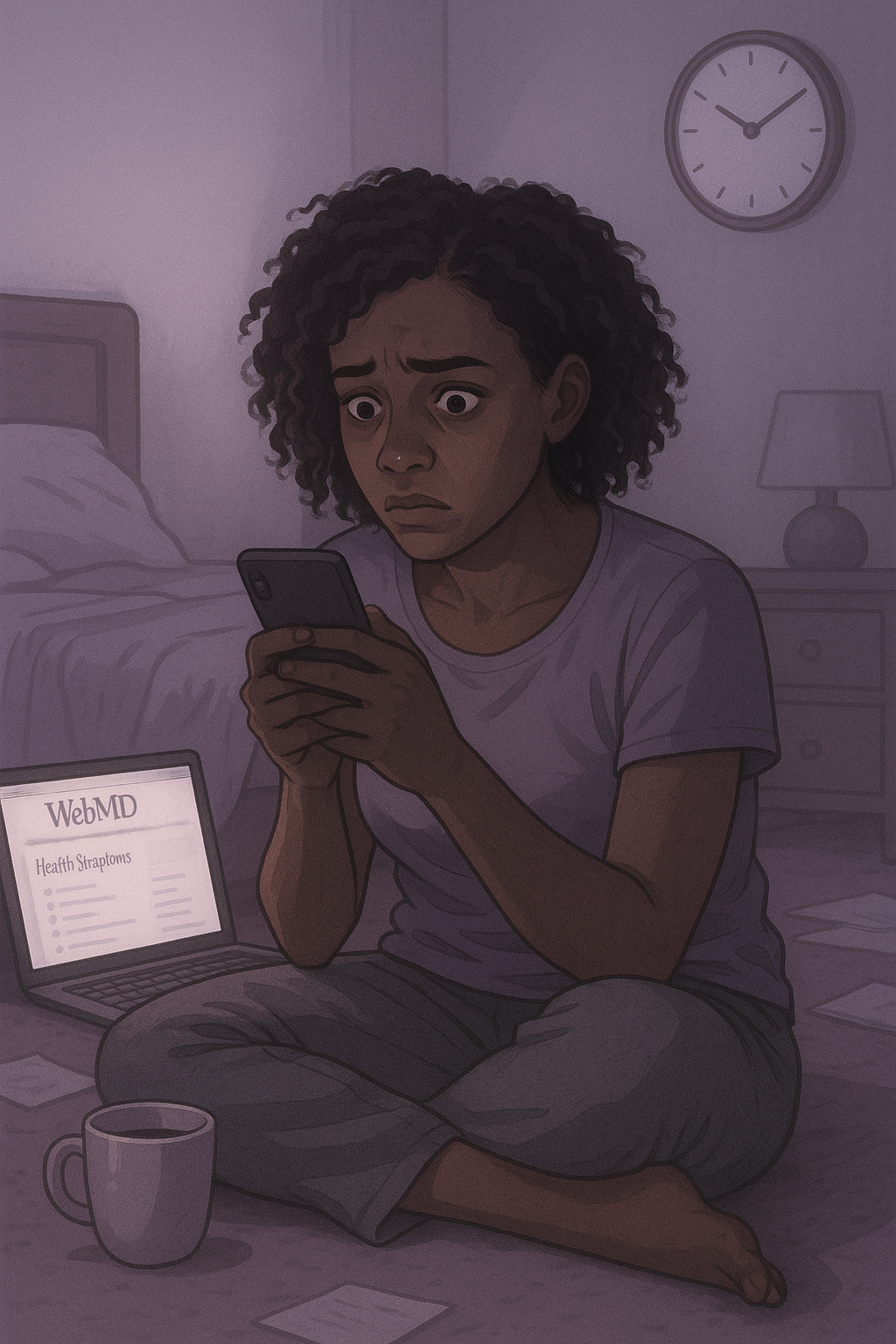
    And suddenly I was on Google. Again.

    “Dull pain behind left eye.”
    “Is one-sided eye pain a sign of stroke?”
    “How do I know if I’m having a brain aneurysm?”

    I wish I was exaggerating. I’m not.

    The clock said 10:14 AM. I was supposed to be logging into work. Instead, I was sitting on the edge of my bed with my heart racing and my phone in a death grip, refreshing search results like they held the answers to life itself.

    One minute I thought it was sinus pressure.
    The next, I was convinced I had a tumor.
    Then I read an article that mentioned eye strain and felt a fleeting sense of relief… until the next twinge.

    I checked my pulse.
    Then I checked it again.
    I tried to yawn to see if it was tension.
    I stretched my jaw. I pressed my temples.
    I reread the same three articles five times.

    At one point, I opened TikTok and searched “eye pain anxiety.”
    Then Reddit.
    Then Facebook health groups (which, let’s be honest, are where hope goes to die).

    I was spiraling, and I knew it.
    But I couldn’t stop.

    I wanted certainty. I wanted to know.
    That I wasn’t dying.
    That it wasn’t serious.
    That this wasn’t the day my life would change forever.

    It wasn’t until my stomach growled that I realized:
    I hadn’t eaten. At all.

    It was 2:47 PM.

    No breakfast.
    No lunch.
    Just anxiety.

    Just me and my phone and an endless loop of fear disguised as research.

    That moment hit me hard.
    I wasn’t dying — but I was disappearing.

    Health anxiety didn’t just take my peace.
    It took my focus.
    My appetite.
    My time.

    And for what?
    A symptom that went away by bedtime.


    That day wasn’t the first time it happened. And it probably won’t be the last.

    But it taught me something I can’t ignore anymore:
    I’m so scared of dying, I forget to live.

    I forget to eat.
    I forget to be present.
    I forget I’m still here — breathing, surviving, trying.

    Now, when I catch myself spiraling, I try to do something different.
    Sometimes it’s just closing the tab.
    Other times it’s eating anyway, even if I feel sick.
    Sometimes I write down the symptom in my tracker and promise myself I won’t Google for 24 hours.

    It’s not perfect.
    But it’s better than disappearing again.


    💜 If this hit you in the gut…

    You’re not alone.
    Anxiety is loud, scary, and convincing. But you deserve a life outside of symptom spirals.

    Download my free Anxiety Tracker to start logging your symptoms instead of Googling them.

  • When the Calm Breaks: Parenting Through a Panic Storm

    When the Calm Breaks: Parenting Through a Panic Storm

    Trigger Warning: Panic, Anxiety, Mental Health
    Disclaimer: This is a personal reflection and not medical advice.

    This morning I woke up on empty.
    Not physically. I slept maybe four hours but emotionally, spiritually, mentally… I was drained before the day even started.

    Anxiety hit fast.
    No trigger. No warning. Just that rush in my chest, that nervous buzzing in my stomach like something awful was about to happen. My first instinct? Cry. Scream. Hide. I wanted to escape my own skin.

    But I didn’t shut down completely.

    I tried.
    God, I tried.

    I prayed.
    I stayed under the weighted blanket, telling myself over and over, “You’re okay. This is just anxiety. You’ve felt this before. You will not die.”

    I wanted to take something to calm down, but fear crept in: What if it makes things worse? What if my body reacts?
    So instead, I leaned into what I could do.


    My mom helped the kids this morning.
    My husband stepped in. Not just physically, but emotionally.

    He sat with me.
    He massaged my shoulders and my back, slow and gentle just enough pressure to remind me I was still here, still safe. He offered distractions:
    “Want to play a game?”
    “Wanna scroll and find something funny?”
    “Try this it’s lemon. The sour might shock your senses.”

    And it did help not all at once, but enough to interrupt the spiral.

    I still felt shaky. Still felt like I couldn’t breathe deep. Still felt that heavy, horrible “what if” voice whispering that something was wrong with me.
    But I kept trying.

    I drank water.
    I got up to pee even though I didn’t want to move.
    I talked. I cried. I let him hold me.
    And even though I didn’t feel instantly better, I reminded myself that surviving the storm is enough.


    Anxiety doesn’t care if you have kids.
    It doesn’t care if you had a good day yesterday.
    It doesn’t care if your life is finally starting to feel like it’s in order.

    But I do.

    I care.
    About healing. About showing up. About doing whatever it takes to not let this monster win.

    So today, if you’re reading this under your own weighted blanket, if you’re gripping your chest trying to figure out if it’s anxiety or something worse I want you to know:

    You’re not failing.
    You’re fighting.
    And that matters.

    Even when it doesn’t feel like progress it is.

    You got out of bed. You asked for help. You’re reading this.

    That’s effort.
    That’s resilience.
    That’s you, still here.

  • No, You’re Not Dying — But Anxiety Will Try to Convince You Anyway.

    No, You’re Not Dying — But Anxiety Will Try to Convince You Anyway.

    ⚠️ Trigger Warning:

    This post talks about panic attacks, health anxiety, and intrusive thoughts. If you’re feeling emotionally sensitive right now, please care for yourself first before reading.

    🩺 Disclaimer:

    I’m not a therapist, doctor, or mental health expert. I’m just a mom living with anxiety and sharing my truth. This is my personal experience, not medical advice.

    You know what’s messed up?

    Anxiety doesn’t come in gentle.
    It doesn’t knock and say, “Hey mama, you okay?”
    It kicks the door in screaming, “YOU’RE ABOUT TO DIE. RIGHT NOW.”

    And the worst part?
    You believe it.
    Every. Damn. Time.

    Your chest feels tight — must be your heart.
    Your arm tingles — stroke incoming.
    You get dizzy — oh God, it’s happening again.

    You try to breathe but forget how.
    You stand still but your brain is sprinting laps.
    You cry but somehow still feel numb.

    I’ve been there — not once, but a hundred times.
    I’ve checked my pulse like it was a lifeline.
    I’ve laid in bed whispering, “Please let me wake up tomorrow.”

    But here’s the truth:
    I didn’t die.
    And neither will you.

    Because anxiety lies.
    It mimics everything fatal while being absolutely survivable.
    It takes symptoms and spins them into stories that aren’t real.
    It drags you into fear and makes you forget logic.

    But look at you — still here.
    Still breathing.
    Still reading this.

    That means anxiety didn’t win today.
    And it won’t tomorrow either.

    So the next time your mind says “This is it,”
    Say back:
    “No, this is anxiety. And I’ve made it through before.”

    You’re not weak.
    You’re not broken.
    You’re just a human with a loud brain and a tender heart.

    And that’s okay.

  • I Was Fine…Until I Noticed That Sensation

    I Was Fine…Until I Noticed That Sensation

    ⚠️ Trigger Warning:

    This post contains real descriptions of panic attacks, health anxiety spirals, and physical symptoms like chest tightness, dizziness, and shoulder pain. Please take care of yourself while reading.


    📝 Disclaimer:

    I’m not a doctor or therapist. I’m just a mom with anxiety, documenting my reality in hopes that someone else out there feels less alone. This is not medical advice — just lived experience.

    It Started with a Sensation

    I was sitting down.
    Not panicked. Not overwhelmed. Just… still.
    And then it hit me.

    A tiny tightness in my chest.
    A strange awareness in my jaw.
    A pressure behind my shoulder blade.
    A flutter I couldn’t explain.
    A breath that felt just slightly off.

    That was all it took.
    My brain flipped the switch.
    And the thought came rushing in:

    “What if this is something serious?”


    When Your Body Feels Like a Trap

    This is how it always starts.
    I feel something I can’t name — and suddenly I’m hyper-aware of everything.
    Is my heart beating too fast?
    Is my arm tingling?
    Why does my face feel tight?
    What if this is a stroke… or worse?

    Even when I know it’s anxiety…
    Even when I’ve survived this before…
    It still feels real.
    And that’s the part no one talks about — how convincing anxiety can be. How it lies to you in your own body.


    The “What If This Time It’s Real?” Fear

    You’ve heard me say it before:

    “This feels different.”
    “It’s on the other side this time.”
    “It’s not like the last panic attack.”

    That’s what health anxiety does.
    It makes the same fear feel brand new every single time.
    It doesn’t care that your EKG was fine.
    It doesn’t care that your labs were normal.
    It just whispers, “But what if they missed something?”

    And then you’re spiraling.


    What It Feels Like (From Me, To You)

    I’ve had:

    • Cheekbone pain I swore was something serious
    • Right shoulder pain that got worse when I moved my neck
    • Chest tenderness that scared me because it was pinpointed
    • Jaw tightness that convinced me it was heart-related
    • A weird light feeling in my chest that made me panic in silence

    And I’ve said things like:

    “I know I’ve had panic before… but this feels new.”
    “It came out of nowhere.”
    “I was okay all day, and now this.”


    📎 Related Post:

    Want to go deeper into this anxiety cycle?
    👉🏽 Health Anxiety and the Phobias No One Talks About


    The Truth I Keep Coming Back To

    I’ve lived through 100+ false alarms.
    I’ve panicked, spiraled, cried, begged God, and woke up the next day breathing.
    Because it wasn’t a heart attack.
    It wasn’t a stroke.
    It was anxiety lying in my voice, wearing my body.

    And if you’re in that space right now —
    Panicking over a feeling you can’t explain —
    Wondering if this is the time something actually happens —

    I want you to hear this:

    You’re not dying. You’re scared. You’re overwhelmed. You’re still here.

    And that matters more than anything.

  • Unmedicated but Anxious: My Honest Truth

    Unmedicated but Anxious: My Honest Truth

    Trigger warning: anxiety, panic attacks, medication fear

    Disclaimer: this post is based on personal experience and public research. it is not medical advice. always consult with a healthcare professional before starting or stopping any medication.

    I live with anxiety every single day.
    And I don’t take daily medication.

    Not because I don’t believe in it.
    Not because I’m trying to be some “strong, natural” version of a mom.
    But because I’m scared.

    This is my truth — the in-between space where panic is real, meds are terrifying, and I’m still trying to survive.


    I’ve Tried Medication — It Didn’t Go Well

    This isn’t a story about someone who refused to get help.
    This is a story about someone who tried… and had a hard time.

    I’ve been prescribed:

    • Zoloft – it gave me intense side effects that made me feel worse, not better.
    • Lexapro and Celexa – I didn’t feel like myself. Just emotionally flat and off.
    • Wellbutrin – was suggested to help with quitting smoking, but it left me moody and on edge.
    • Propranolol – helped a bit with physical symptoms like racing heart, but I couldn’t stay on it.

    Now, the only medication I occasionally take is Hydroxyzine — and even then, I cry before I take it.

    Not because I think I’m above medication.
    Because I’m anxious about the very thing that’s supposed to help my anxiety.


    Medication Anxiety Is Real — And I Have It

    There’s a name for what I go through: medication anxiety.

    It’s not uncommon.
    In fact, studies have shown that fear of side effects, fear of becoming dependent, or fear of losing control are among the top reasons people avoid or discontinue anxiety medications — even when they need them.

    One study published in BMJ Open (2018) found that stigma, fear of adverse effects, and distrust in medication were significant barriers to treatment for anxiety and depression.

    And I feel that deeply.
    I want relief — I really do.
    But the idea of putting something in my body that might make things worse? That fear is paralyzing.


    But I’m Not Anti-Medication. Not At All.

    Let me say this loudly:
    There is no shame in taking medication for anxiety.

    Some people take it and feel like they can breathe again for the first time in years.
    Some need it long-term. Others only short-term.
    Some combine it with therapy. Some don’t.

    All of it is valid.

    Just because I’m not on daily meds right now doesn’t mean I won’t try again.
    And it definitely doesn’t mean I think less of anyone who needs them to function.

    I celebrate every mom, every person, who is doing whatever they need to do to feel better — whether that includes medication or not.


    So How Do I Cope Without Daily Meds?

    Honestly? It’s not always pretty.
    Some days I feel like I’m barely hanging on.
    Some days I wish I could fast-forward through the panic, the overthinking, the chest tightness, the spirals.

    But I’ve built my own support system — not perfect, but something.

    What helps me manage for now:

    • Hydroxyzine (only during extreme panic attacks)
    • Grounding exercises and deep breathing
    • Journaling with my Peace Over Panic Journal
    • My “You vs. Anxiety” tracker to monitor symptoms and identify patterns
    • Faith, prayer, and reassurance rituals when fear feels overwhelming
    • Crying it out and not pretending to be okay

    Some days it works. Some days it doesn’t.
    But I keep showing up anyway.


    What I Wish People Understood

    Living with untreated anxiety doesn’t mean I’m irresponsible.
    It means I’m trying to find a way forward that doesn’t scare me even more.

    People say:

    “Just take the pill, it’ll help.”
    “Millions of people are on it — you’ll be fine.”
    “It’s just in your head.”

    But anxiety is in my body, too.
    And trauma around how meds have made me feel in the past is very real.

    So I take it day by day.
    Symptom by symptom.
    And I stay open — because I haven’t given up.


    To Anyone Like Me…

    If you’re scared of medication but also scared of how anxiety is taking over your life — you are not alone.
    If you’ve tried and had bad reactions — you’re not crazy.
    If you’re somewhere in the middle — not fully okay, not fully medicated — I’m with you.

    This isn’t a perfect ending or a cure-all.
    It’s just my truth:
    Unmedicated. Anxious. Still trying. Still hoping. Still fighting.


    💜 What Helps Me Stay Grounded

    I’ve created a space called The Calm Vault — it’s where I keep the free tools, worksheets, and gentle supports that have helped me feel a little less alone on the hard days.
    Inside, you’ll find things like:

    • Printable anxiety check-ins
    • Emotional tracking sheets
    • Journaling prompts
    • Reassurance pages for when you’re spiraling

    All real. All free. All created with love for the overwhelmed medicated and unmedicated.


  • Health Anxiety and the Phobias No One Talks About

    Health Anxiety and the Phobias No One Talks About

    Cardiophobia, Agoraphobia, and Thanatophobia — My Unfiltered Truth

    ⚠️ Trigger Warning:

    This post contains personal discussion of health anxiety, panic attacks, fear of death, and medical-related phobias. If you’re currently feeling triggered or overwhelmed, please take a moment before reading. You are not alone, and you are safe.

    📌 Disclaimer:

    I’m not a doctor or therapist. I’m just a woman who lives with intense anxiety and wants to share her truth. This post is for support, honesty, and connection—not diagnosis or medical advice.

    💬 Let’s Talk About the Phobias That Hide Behind Anxiety

    Everyone throws around the word “anxiety” like it’s no big deal—like it’s just nerves or stress. But for some of us? It runs much deeper. It morphs into specific, paralyzing fears that take over our thoughts, our bodies, and our lives.

    I live with three phobias that rule way too much of my day:

    • Cardiophobia (fear of having a heart attack),
    • Agoraphobia (fear of being trapped or losing control in public), and
    • Thanatophobia (fear of dying).

    I don’t talk about this for pity. I talk about it because someone needs to. If you’ve ever felt alone in your fear—like your brain is the loudest one in the room—I hope this post gives you a moment of breath, a moment of recognition, and a moment of peace.


    Cardiophobia: When Every Heartbeat Feels Like a Warning Sign

    This is the one that hits me hardest.

    Cardiophobia means I don’t trust my own body. I’ve felt one chest twinge and convinced myself it was the beginning of the end. I’ve checked my pulse over and over until my fingers were sore. I’ve sat through full-blown panic attacks, shaking, crying, sure I was having a heart attack—even after tests came back clear.

    This phobia doesn’t care about facts.
    It doesn’t care that I’ve been to the ER and lived.
    It only whispers, “What if this time is different?”

    And the worst part? It feels so real. My body responds with real symptoms—tightness, dizziness, numbness—all from a fear that refuses to be quiet.


    Agoraphobia: The World Feels Safer When I Stay Home

    People think agoraphobia means you’re scared of open spaces. That’s not quite it.

    For me, it’s about losing control in public. It’s:

    • Being afraid to stand in a long line because what if I faint?
    • Avoiding crowded places because what if I can’t breathe?
    • Staying home because what if I panic and can’t escape fast enough?

    Agoraphobia shrinks your world. It tells you that safety only exists in certain places—like your home, your car, or wherever your “safe person” is.

    I’ve missed out on so many moments—not because I didn’t want to go, but because I was afraid of what might happen if I went.


    Thanatophobia: The Fear of Death That Never Leaves

    This one is quieter but just as loud in my head.

    Thanatophobia is the fear of dying. Not in a dramatic, horror-movie way. In a slow, sneaky way where every random body sensation turns into a death sentence in my mind.

    A weird ache? Must be an aneurysm.
    Sudden fatigue? Probably something terminal.
    A sharp pain in my jaw or head? The beginning of the end.

    And when I lie in bed at night, that fear sits on my chest like a weight.
    Not just fear of death… but fear of leaving my kids, of the unknown, of not existing. It’s a fear that makes it hard to dream about the future because you’re always stuck wondering if you’ll make it there.


    These Phobias Are Real. And You’re Not the Only One.

    No, I’m not making this up.
    No, I’m not exaggerating.
    No, I’m not “just being dramatic.”

    If you’ve ever lived with any of these:

    • The obsessive Googling
    • The repeated doctor visits just to be told “you’re fine”
    • The guilt of missing out on life because of your fears

    …then you already know: this is real. It’s valid. And it’s hard.

    But it’s also manageable. Not curable overnight, not erased with a mantra—but manageable. With awareness. With community. With patience. And with grace for yourself.


    What’s Helping Me Cope Right Now

    I’m still deep in the healing, but here are a few things that help me manage my phobias day by day:

    • 📝 Reassurance Journaling — tracking past fears that didn’t come true ( I created one just for us).
    • 📲 Limiting health Googling — no more rabbit holes at 3 a.m.
    • Grounding statements — “I’ve felt this before. I survived this before.”
    • 🩺 Honest conversations with doctors — I ask, I clarify, I advocate
    • 🌬 Breathwork + distraction — shifting my focus when fear takes over

    Healing is messy, but naming what I’m going through helps me feel less trapped by it. It turns fear into something I can actually face.


    Final Words: If You Get It, You’re Not Alone

    If you’ve ever felt the panic build over a heartbeat, a store aisle, or a thought of death—I see you. I am you.

    You are not broken.
    You are not too much.
    You are not weak.

    You’re a human being with a sensitive nervous system, trying to survive a world that doesn’t always feel safe. That’s not failure — that’s bravery.

    So let this blog post be your permission to say it out loud:

    “I have phobias. I have fear. But I also have fight.”

    And you’re still here. Still breathing. Still pushing forward. That matters more than anyone knows.

  • The Guilt That Comes With Anxiety — Especially as a Mom

    The Guilt That Comes With Anxiety — Especially as a Mom

    What if I passed my anxiety down to my child?
    A real story for moms who carry the shame no one sees.

    ⚠️ Trigger Warning & Disclaimer:

    This post speaks honestly about anxiety, panic attacks, and emotional guilt as a mother. If you’re in a fragile space, take a breath and come back when you’re ready.
    I’m not a therapist. I’m just a mom who’s been there — and is still there some days. This is not medical advice. It’s a lived experience.

    💭 The Guilt You Don’t Talk About

    Let’s be honest — motherhood comes with guilt even on a good day.
    But when you’re living with anxiety?

    It hits different.

    You start wondering:

    • “Did they see me panic?”
    • “Am I scaring them without meaning to?”
    • “Are they learning fear from me?”
    • “What if I passed this down?”

    It’s not just guilt. It’s grief.
    Grieving the version of you you wish they had.
    Grieving the calm, steady, carefree mom you want so badly to be — but can’t always reach through the fog of anxiety.


    🧠 When Your Mind is Loud, But You Still Have to Parent

    Anxiety doesn’t wait until you have free time.
    It doesn’t care if your toddler needs help or if your teen needs to talk.

    It shows up in the middle of lunch. During bedtime.
    At the store. On a random Tuesday.

    You try to hold it in — to be strong.
    You fake smiles, push through, and whisper “I’m fine” when you’re not.

    But when your child starts to notice…
    When they look at you with worry in their eyes…
    That’s when the guilt gets loud.


    😞 “Did I Give My Baby This Anxiety?”

    I remember the moment my daughter started showing signs of anxiety.

    She was 11. Then 12. Then 13.
    And it was like watching a younger version of me unravel in real time.

    I panicked inside.
    Not because I judged her — but because I recognized it.

    And suddenly, all the thoughts came rushing in:

    • “She saw too much.”
    • “I failed to protect her from me.”
    • “She inherited this because I was too broken to shield her.”

    Then someone said it out loud:

    “She gets it from you.”

    And I broke.


    🖤 But Here’s What I Know Now…

    Yes — maybe she inherited some of my anxiety.
    But she also inherited my awareness, my emotional vocabulary, and my fight.

    She’s learning how to name her feelings.
    How to breathe through them.
    How to talk about what hurts instead of bottling it up.

    Because I do.

    She’s seen me cry, yes.
    But she’s also seen me recover.
    Seen me ground myself. Seen me fight for peace even when it doesn’t come easy.

    And that… is parenting through anxiety with power.


    💬 The Truth About Guilt and Anxiety as a Mom

    You’re not ruining your kids.
    You are teaching them what real, emotional strength looks like.

    You’re showing them:

    • How to get back up after a panic spiral
    • How to ask for help when it’s hard
    • How to feel deeply without shame
    • How to cope without pretending everything’s perfect

    And that kind of parenting?
    That’s generational healing.

    You are not your guilt.
    You are the bridge between silence and safety for your kids.


    🕊️ Give Yourself Grace Today

    If you’ve been carrying guilt for how your anxiety shows up in motherhood, here’s what I want you to know:

    ✨ You are not a bad mom.
    ✨ You are a mom carrying something heavy — and still showing up with love.
    ✨ You are allowed to struggle. That doesn’t make you weak. It makes you human.


    📥 Free Support for Anxious Moms

    If this post hit home, I made some things just for you:
    💜 Download my FREE anxiety tracker + healing journal here
    📖 Read my full story in Living in the Panic — eBook available now

Access calming tools, guided journals, and anxiety support

Get instant access to calming tools, journal prompts, and healing pages created for overwhelmed, overthinking souls — and join the Anxiety Momster newsletter for ongoing support, updates, and mental health resources.

💜 100% free. No pressure. Just peace.

You can unsubscribe anytime. For more details, review our Privacy Policy.