Category: Parenting kids with anxiety

  • What It’s Really Like Working a Full-Time Job With an Anxiety Disorder

    What It’s Really Like Working a Full-Time Job With an Anxiety Disorder

    Trigger Warning: This post discusses panic attacks, physical anxiety symptoms, health anxiety, and the emotional reality of working while managing an anxiety disorder. If you’re feeling anxious or overwhelmed today, pause and return when you’re grounded. Your peace matters.

    Disclaimer:
    I am not a doctor, therapist, or medical professional. Everything shared in this post is based on my personal experience living with severe anxiety and panic disorder. This content is for support, education, and storytelling — not medical or professional advice. Always consult a licensed provider for your personal health concerns. If you are in crisis, seek immediate help.

    People love to say,
    “Working from home must make your anxiety easier, right?”

    Let me shut that down gently but truthfully:
    anxiety doesn’t care where I clock in.

    I wake up most mornings not in peace, but in panic mode—heart already racing, head doing that weird single-spot pressure thing, chest feeling “funny,” body tingling like a static TV screen. Before I even log in, I’m grounding myself, breathing, and reminding my brain that I’m still alive.

    The mornings hit hard

    Some days I open my eyes and instantly feel “off.”
    Not sick.
    Not in danger.
    Just… wrong.

    That “wrong” feeling is the start of my daily mental battle.

    While people imagine remote work as cozy and relaxing, here’s me in real life:

    • Stomach flipping
    • Head sensations out of nowhere
    • Tingling arms or face
    • Heart doing one random bloop
    • Anxiety whispering lies at 7 AM

    And I still get up, take my meds, wash my face, drink water, and clock in.

    Working from home helps… but anxiety still acts wild

    My job is actually supportive.
    No phone calls with patients.
    Quiet workflow.
    Meetings with my camera on even if my lights are off.
    I’m grateful.

    But guess what?
    Anxiety doesn’t respect that.

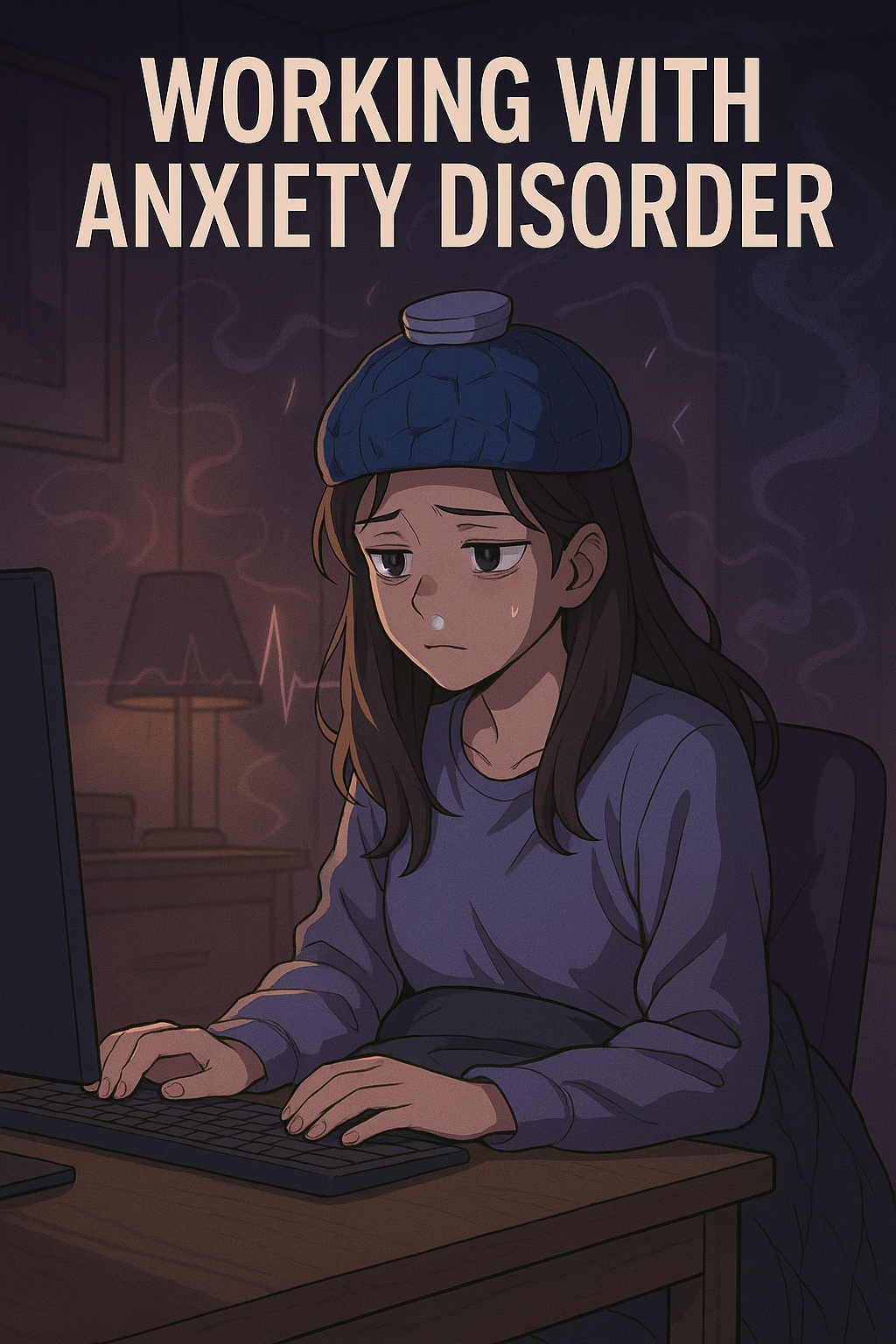
    I’ve literally sat through meetings wearing a migraine cap, lights off, camera on nodding like everything is normal while my head is tingling and my chest just jumped for no damn reason.

    The dual life of working with anxiety

    On the outside, I’m a calm AR specialist working claims, emailing payers, researching accounts.

    On the inside? It looks like this:

    • “Why did my chest just jump like that?”
    • “Why does this one spot on my head feel weird?”
    • “Why am I tingling again?”
    • “Why does my body feel off?”
    • “Is this anxiety or something else?”

    All while I’m typing notes, completing tasks, and showing up like a professional.

    This is what working through anxiety ACTUALLY looks like:

    • Splashing cold water on my face mid-shift
    • Vicks under my nose because it calms my breathing
    • Wearing my migraine cap during meetings
    • Camera on, lights off, smiling through panic
    • Weight blanket over me at my desk so I don’t crawl into bed
    • Using Hydroxyzine to calm down and fighting the sleepiness it brings
    • Working claims while grounding myself
    • Rubbing my chest when it jumps for no reason
    • Asking myself 500 times, “Am I okay?”
    • Breathing through waves of panic that hit out of nowhere

    This is high-functioning anxiety the part nobody sees.

    The real struggle is doing both: working AND battling panic

    People think anxiety at work is just “being stressed.”
    No.
    It’s your body acting like you’re in danger while you’re literally doing data entry.

    It’s surviving invisible storms while keeping your job performance steady.

    It’s being your own emotional support human while meeting deadlines.

    But here’s the part I’m most proud of:

    Every day that anxiety tries me…
    I STILL show up.
    I still work.
    I still take care of my kids.
    I still keep the house steady.
    I still breathe through the fear.
    I still finish my tasks.
    I still get through the day.

    Even when I feel “off.”
    Even when my body is loud.
    Even when my brain lies.
    Even when I wake up scared.
    Even when every symptom tries to knock me down.

    Working with an anxiety disorder doesn’t make you weak it makes you powerful.

    It makes you resilient.
    It makes you brave.
    It makes you human.

    And if you’re reading this while working through your own anxiety…
    I see you.
    You’re not alone.
    You’re not crazy.
    Your body is just loud.
    Your mind is just scared.

    But you?
    You’re doing the damn thing anyway.

    And that counts as strength every single day.
  • I’m Not Okay — And That’s Okay Too

    Trigger warning: Mental health, anxiety, panic, and emotional overwhelm.
    Disclaimer: I’m not a medical professional. I’m just a real mom, talking through real moments, trying to survive the chaos one breath at a time.


    Let’s not sugarcoat it:
    I’m not okay.

    I’m not “a little tired.”
    I’m not “just stressed.”
    I’m not “overthinking.”
    I’m drowning in my thoughts while trying to keep five kids alive, hold down two jobs, manage bills we can barely pay, fight the urge to light another cigarette, and survive a world that feels like it’s falling apart every damn day.

    And somehow, I’m still expected to function. Smile. Clock in. Teach. Cook. Comfort. Hold it together. Be the calm one.

    But today, I need to say it out loud — I am not okay.
    And guess what? That’s okay, too.


    This isn’t weakness. This is survival.

    We live in a world where moms are expected to be therapists, teachers, chefs, chauffeurs, nurses, and emotional punching bags — all while pretending we’re “fine.”

    We’re told to take deep breaths and do yoga while our nervous systems are fried and our hearts race over every twitch, headache, or spike in the news.

    We scroll past headlines about war, disease, death, and tragedy — and then still have to flip pancakes like nothing’s wrong.

    That’s not balance.
    That’s emotional whiplash.


    Anxiety doesn’t ask permission to show up.

    Some days, it creeps in quietly.
    Other days, it crashes down like a damn freight train.

    And when you’re already running on fumes, it doesn’t take much — a weird chest sensation, a twitch in your eye, a loud noise from the kids, a late bill, a stupid social media post — to send you into fight-or-flight mode.

    I’ve had moments where I was afraid to sleep.
    Afraid to eat.
    Afraid to be left alone with my own mind.

    And still, I show up.
    Worn-out. Glued together with caffeine and prayers. But I show up.


    So here’s what I’m learning:

    • You don’t have to be “okay” to be worthy of love.
    • You don’t need to be perfect to deserve rest.
    • Crying in the bathroom between tasks does not make you weak — it makes you human.
    • Saying “I can’t handle this right now” is not quitting.
    • Needing help, needing space, needing quiet — that is valid.

    If you’re in a season where your brain feels loud and your body feels heavy — I see you.

    Maybe you’re grieving peace you never really had.
    Maybe your nervous system is tired of surviving on adrenaline.
    Maybe you’re just over it and too damn tired to fake your way through another “I’m fine.”

    I get it.
    And I promise you this:
    You’re not crazy. You’re not weak. You’re not broken.
    You are carrying more than anyone realizes — and still showing up in ways you don’t give yourself credit for.


    So let this be your permission slip:

    To not be okay.
    To sit in the mess for a minute.
    To not chase perfection.
    To not apologize for being human.

    You are doing your best — and that is enough today.


    💬 Let’s talk:

    Have you had one of those “I’m not okay” days lately?
    What do you wish someone would say to you in that moment?

    Drop it in the comments or DM me.
    Let’s stop pretending and start healing — together.

  • Breaking the Stigma: How I Talk to My Kids About Anxiety and Mental Health

    Breaking the Stigma: How I Talk to My Kids About Anxiety and Mental Health

    Anxiety isn’t a quiet thing in our home.
    It’s not hidden behind closed doors or swept under the rug.
    We talk about mental health openly — because in this family, it’s not taboo. It’s real. It’s personal.

    As a mom who lives with severe anxiety and panic attacks, I made a promise to myself: my children would never feel ashamed or confused about what they’re feeling inside. So we talk. Even when it’s hard. Especially when it’s hard.

    Supporting a Child Through Panic Attacks

    My 13-year-old experiences panic attacks that stop her in her tracks — chest tightness, racing thoughts, tears, and fear that something is terribly wrong. I’ve seen her clutch her chest and cry, “I can’t breathe.”

    I’ve been there too.

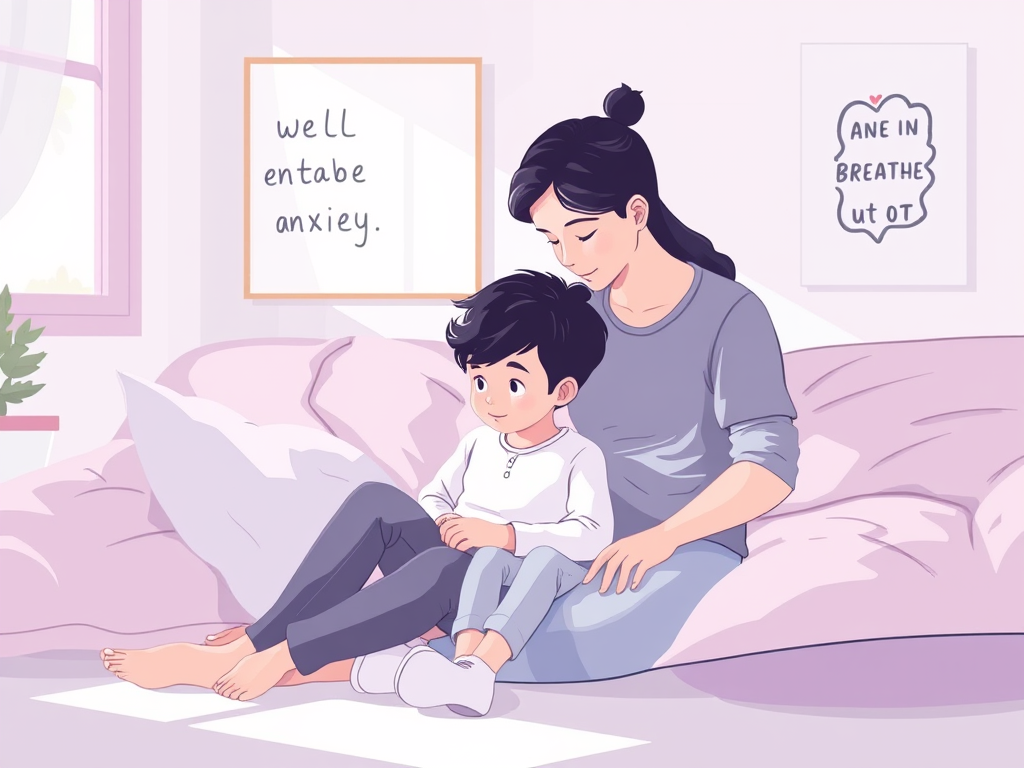
    In those moments, I don’t try to fix her. I sit with her.
    We breathe together:

    • Inhale for 4 seconds
    • Hold for 4 seconds
    • Exhale for 6 seconds

    Over and over, until the panic eases.

    This is how we manage anxiety as a family. This is what it looks like — connection, calm, and compassion.

    Teaching Kids How to Cope with Anxiety

    We’re not just helping our teen — even our youngest is learning.

    My 4-year-old doesn’t fully understand the word “anxiety,” but she knows how to breathe in and out when someone’s upset. She’s seen it in action. Now, she’ll walk up and say, “Breathe with me,” to her older siblings when they’re frustrated.

    She’s learning early what most of us didn’t learn until adulthood —
    your emotions matter, and you’re not alone.

    Why Talking About Mental Health Matters in Parenting

    Breaking the mental health stigma starts at home. In our house, we use words like:

    • Triggered
    • Overwhelmed
    • Calm down space
    • Grounding
    • Anxiety attack

    We don’t say “stop crying.” We don’t say “you’re being dramatic.”
    We validate, support, and walk through it together.

    How to Start Mental Health Conversations With Your Kids

    If you’re not sure where to begin, here’s what’s helped us:

    • Be honest — Let them know it’s okay to feel anxious or scared.
    • Share your own experience (in age-appropriate ways).
    • Practice breathing exercises as a family — even when no one is anxious.
    • Create a calm corner or safe space where kids can retreat and reset.
    • Use children’s books or videos to explain what anxiety feels like.
    • Normalize mental health days the same way we do sick days.

    We Get Through Anxiety Together — One Breath at a Time

    I won’t pretend it’s easy. Some days I feel like I’m barely hanging on. But even in the mess, I know this matters. Talking about anxiety with my kids has brought us closer. It’s helped them feel seen. And it’s helped me heal in ways I never expected.

    In this home, we breathe together. We cry together.
    And we show each other — you don’t have to go through anxiety alone.

    💬 Let’s Talk About It… Together

    If you’re a parent navigating anxiety — yours, your child’s, or both — you are not alone. This is hard, but you’re doing the best you can. And that is enough.

    ✨ Want extra support and free calming tools?
    Download my free Peace Over Panic Digital Journal and Anxiety Tracker — created from our real life, with love, for moms just like you.

    👉 Grab your free copy here
    ✨ Includes daily check-ins, weekly reflections, and breathing tools for tough moments.

    And if this post resonated with you, drop a comment, share it with a friend, or just breathe with me in spirit.

    We’re breaking the stigma, one breath and one honest conversation at a time.

    With love,
    Shanice – Anxiety Momster

Access calming tools, guided journals, and anxiety support

Get instant access to calming tools, journal prompts, and healing pages created for overwhelmed, overthinking souls — and join the Anxiety Momster newsletter for ongoing support, updates, and mental health resources.

💜 100% free. No pressure. Just peace.

You can unsubscribe anytime. For more details, review our Privacy Policy.