Category: Health Anxiety

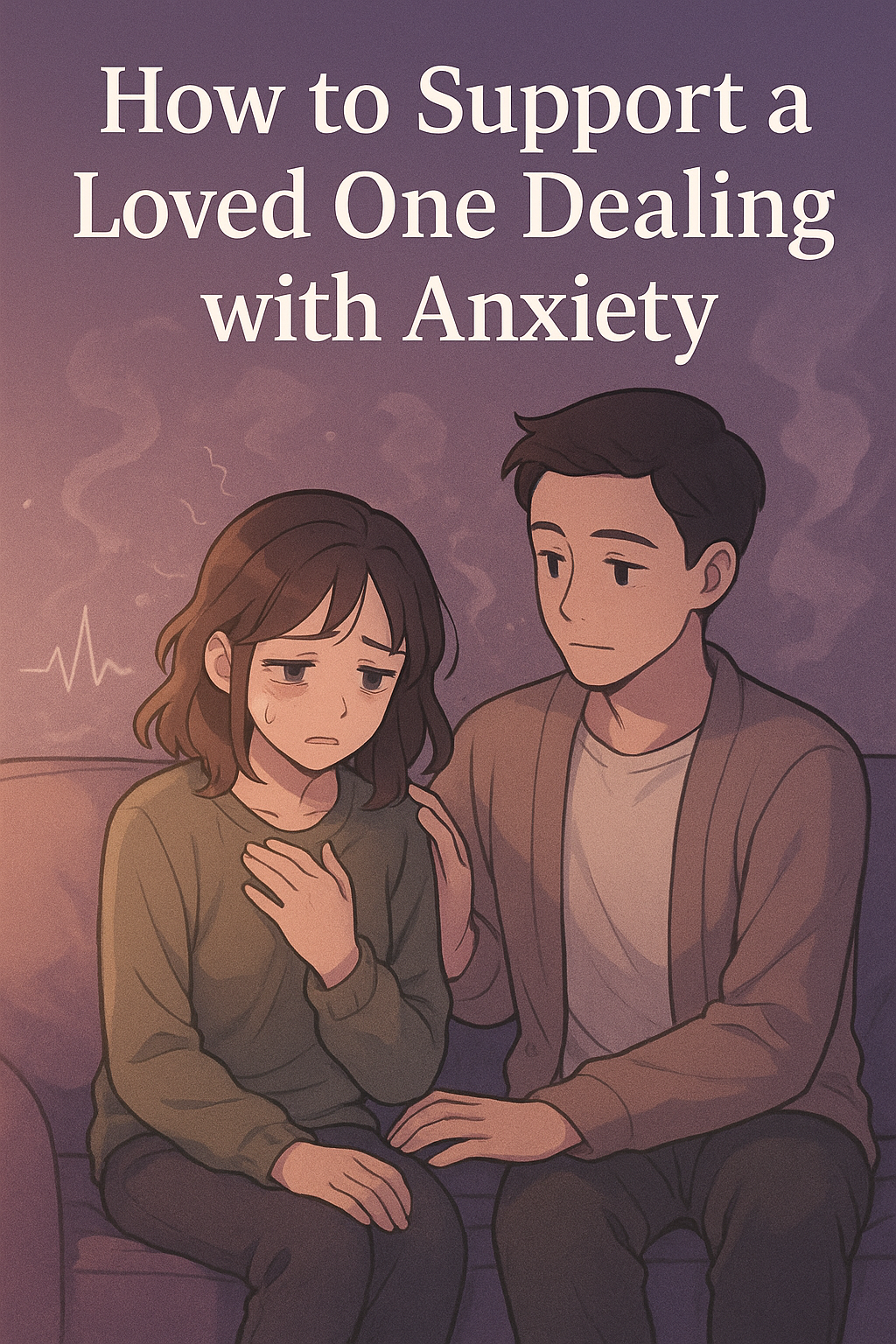
  • How to Support a Loved One Dealing with Anxiety

    How to Support a Loved One Dealing with Anxiety

    Trigger Warning: Anxiety, Panic Symptoms

    Disclaimer: This blog is based on personal experience and is not medical advice.

    Living with anxiety is hard enough…
    but trying to explain it to other people?
    That’s a whole different battle.

    If you’re someone who loves a person dealing with anxiety whether it’s a partner, child, friend, or family member this is your guide.
    Not the cute Pinterest version.
    Not the “just breathe and drink tea” version.
    The REAL version from someone who actually lives it every day.

    And trust me… your support makes more of a difference than you think.


    1. Don’t tell them to “calm down” stay with them instead

    I know people mean well.
    But when someone with anxiety hears “just calm down,” it feels like:

    • you don’t understand
    • you’re annoyed
    • or you think we’re dramatic

    We’re not choosing panic.
    Our brain is literally glitching like a smoke detector going off with no fire in sight.

    What helps?
    Presence.
    Softness.
    A voice that doesn’t rush us.

    Something like:
    “I’m here. You’re safe. We’ll ride this out together.”

    That hits different.


    2. Learn what THEIR anxiety looks like

    Everyone’s anxiety shows up differently.

    Some people shake.
    Some feel sick.
    Some go silent.
    Some feel like they’re floating.
    Some get chest jumps (hello, me).
    Some feel tingles or pressure or heat.

    If you love someone with anxiety, pay attention to THEIR patterns.

    It shows us:
    “You’re paying attention. You care. You’re not minimizing what I feel.”

    That alone calms anxiety more than you know.


    3. Ask what they need don’t assume

    Assuming actually makes things worse.

    Sometimes we need space.
    Sometimes we need a hug.
    Sometimes we need someone to sit with us quietly so our mind stops spiraling.
    Sometimes we need water or grounding.
    Sometimes we need you to just be there.

    The magic sentence is:
    “What do you need right now?”

    That question is grounding all by itself.


    4. Never take their anxiety personal

    When someone with anxiety:

    • pulls back
    • shuts down
    • gets quiet
    • gets irritable
    • gets stuck in their head

    …it is NOT about you.

    It’s about the war happening inside their mind.

    We don’t withdraw because we don’t love you.
    We withdraw because we’re trying not to drown.

    You staying steady and not taking it personally means EVERYTHING.


    5. Create a safe environment

    Support isn’t always loud or dramatic.
    Sometimes it looks like:

    • dimming the lights
    • turning down the TV
    • putting a blanket on them
    • getting them water
    • rubbing their back
    • sitting close
    • giving them space without abandoning them
    • turning off overstimulating noise
    • checking in with a soft voice

    A safe environment is one of the strongest anti-anxiety tools we have.


    6. Don’t pressure them to “snap out of it”

    Listen…
    if snapping out of it worked, I PROMISE we would’ve snapped ourselves right back to normal life 10 years ago.

    People with anxiety aren’t weak.
    They’re exhausted from fighting invisible battles every day.

    Give them grace.
    Give them patience.
    Give them understanding.


    7. Celebrate the small wins with them

    Panic brains love to downplay progress.

    So when your loved one:

    • gets out of bed
    • goes to work
    • runs errands
    • faces a fear
    • goes to the store
    • sits through a flare without leaving
    • says, “I survived another attack today”

    CHEER THEM ON.

    Tell them they did amazing.
    Tell them you see their effort.

    Because anxiety makes us feel like failures
    Your voice reminds us we’re not.


    8. Be consistent even when anxiety is ugly

    Anxiety is messy.
    Sometimes all over the place.
    Sometimes irrational.
    Sometimes draining.

    What we need most?

    Consistency.

    People who DON’T disappear when things get tough.
    People who don’t call us dramatic.
    People who don’t treat our symptoms like a personality flaw.

    People who stay.

    That’s support.


    Love is louder than anxiety

    Supporting someone with anxiety isn’t about fixing them.
    It’s about making sure they never face their fear alone.

    The truth?
    We don’t need perfection.
    We just need patience and presence.

    A soft place to land.
    A steady hand to hold.
    Someone who sees the person underneath the panic.

    And if you’re that person for someone —
    You’re a blessing they’ll never forget.

    I am so thankful for my husband, mom, and kids.

    We will get through this!

    Want more? Sign up for my newsletter.
  • What It’s Really Like Working a Full-Time Job With an Anxiety Disorder

    What It’s Really Like Working a Full-Time Job With an Anxiety Disorder

    Trigger Warning: This post discusses panic attacks, physical anxiety symptoms, health anxiety, and the emotional reality of working while managing an anxiety disorder. If you’re feeling anxious or overwhelmed today, pause and return when you’re grounded. Your peace matters.

    Disclaimer:
    I am not a doctor, therapist, or medical professional. Everything shared in this post is based on my personal experience living with severe anxiety and panic disorder. This content is for support, education, and storytelling — not medical or professional advice. Always consult a licensed provider for your personal health concerns. If you are in crisis, seek immediate help.

    People love to say,
    “Working from home must make your anxiety easier, right?”

    Let me shut that down gently but truthfully:
    anxiety doesn’t care where I clock in.

    I wake up most mornings not in peace, but in panic mode—heart already racing, head doing that weird single-spot pressure thing, chest feeling “funny,” body tingling like a static TV screen. Before I even log in, I’m grounding myself, breathing, and reminding my brain that I’m still alive.

    The mornings hit hard

    Some days I open my eyes and instantly feel “off.”
    Not sick.
    Not in danger.
    Just… wrong.

    That “wrong” feeling is the start of my daily mental battle.

    While people imagine remote work as cozy and relaxing, here’s me in real life:

    • Stomach flipping
    • Head sensations out of nowhere
    • Tingling arms or face
    • Heart doing one random bloop
    • Anxiety whispering lies at 7 AM

    And I still get up, take my meds, wash my face, drink water, and clock in.

    Working from home helps… but anxiety still acts wild

    My job is actually supportive.
    No phone calls with patients.
    Quiet workflow.
    Meetings with my camera on even if my lights are off.
    I’m grateful.

    But guess what?
    Anxiety doesn’t respect that.

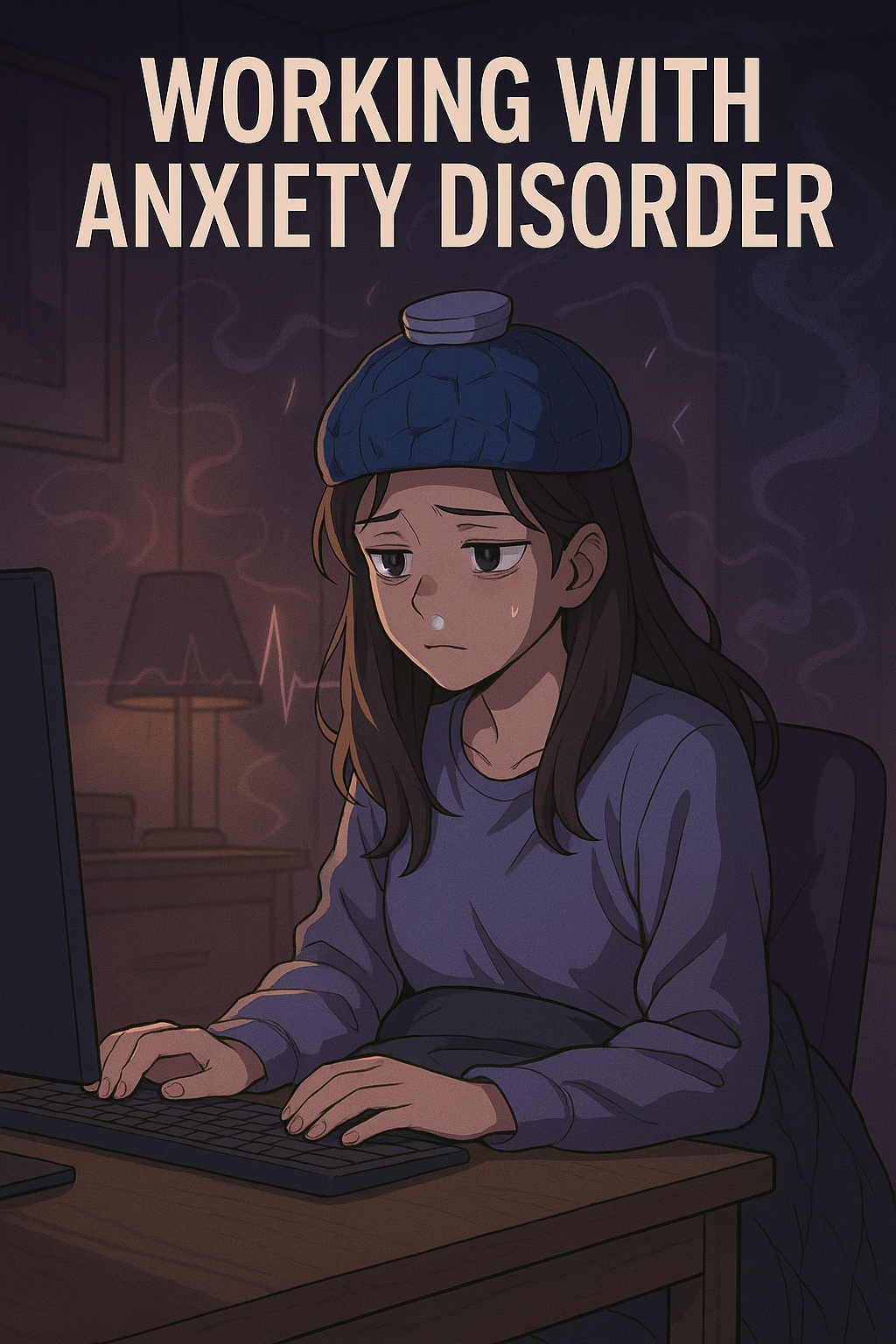
    I’ve literally sat through meetings wearing a migraine cap, lights off, camera on nodding like everything is normal while my head is tingling and my chest just jumped for no damn reason.

    The dual life of working with anxiety

    On the outside, I’m a calm AR specialist working claims, emailing payers, researching accounts.

    On the inside? It looks like this:

    • “Why did my chest just jump like that?”
    • “Why does this one spot on my head feel weird?”
    • “Why am I tingling again?”
    • “Why does my body feel off?”
    • “Is this anxiety or something else?”

    All while I’m typing notes, completing tasks, and showing up like a professional.

    This is what working through anxiety ACTUALLY looks like:

    • Splashing cold water on my face mid-shift
    • Vicks under my nose because it calms my breathing
    • Wearing my migraine cap during meetings
    • Camera on, lights off, smiling through panic
    • Weight blanket over me at my desk so I don’t crawl into bed
    • Using Hydroxyzine to calm down and fighting the sleepiness it brings
    • Working claims while grounding myself
    • Rubbing my chest when it jumps for no reason
    • Asking myself 500 times, “Am I okay?”
    • Breathing through waves of panic that hit out of nowhere

    This is high-functioning anxiety the part nobody sees.

    The real struggle is doing both: working AND battling panic

    People think anxiety at work is just “being stressed.”
    No.
    It’s your body acting like you’re in danger while you’re literally doing data entry.

    It’s surviving invisible storms while keeping your job performance steady.

    It’s being your own emotional support human while meeting deadlines.

    But here’s the part I’m most proud of:

    Every day that anxiety tries me…
    I STILL show up.
    I still work.
    I still take care of my kids.
    I still keep the house steady.
    I still breathe through the fear.
    I still finish my tasks.
    I still get through the day.

    Even when I feel “off.”
    Even when my body is loud.
    Even when my brain lies.
    Even when I wake up scared.
    Even when every symptom tries to knock me down.

    Working with an anxiety disorder doesn’t make you weak it makes you powerful.

    It makes you resilient.
    It makes you brave.
    It makes you human.

    And if you’re reading this while working through your own anxiety…
    I see you.
    You’re not alone.
    You’re not crazy.
    Your body is just loud.
    Your mind is just scared.

    But you?
    You’re doing the damn thing anyway.

    And that counts as strength every single day.

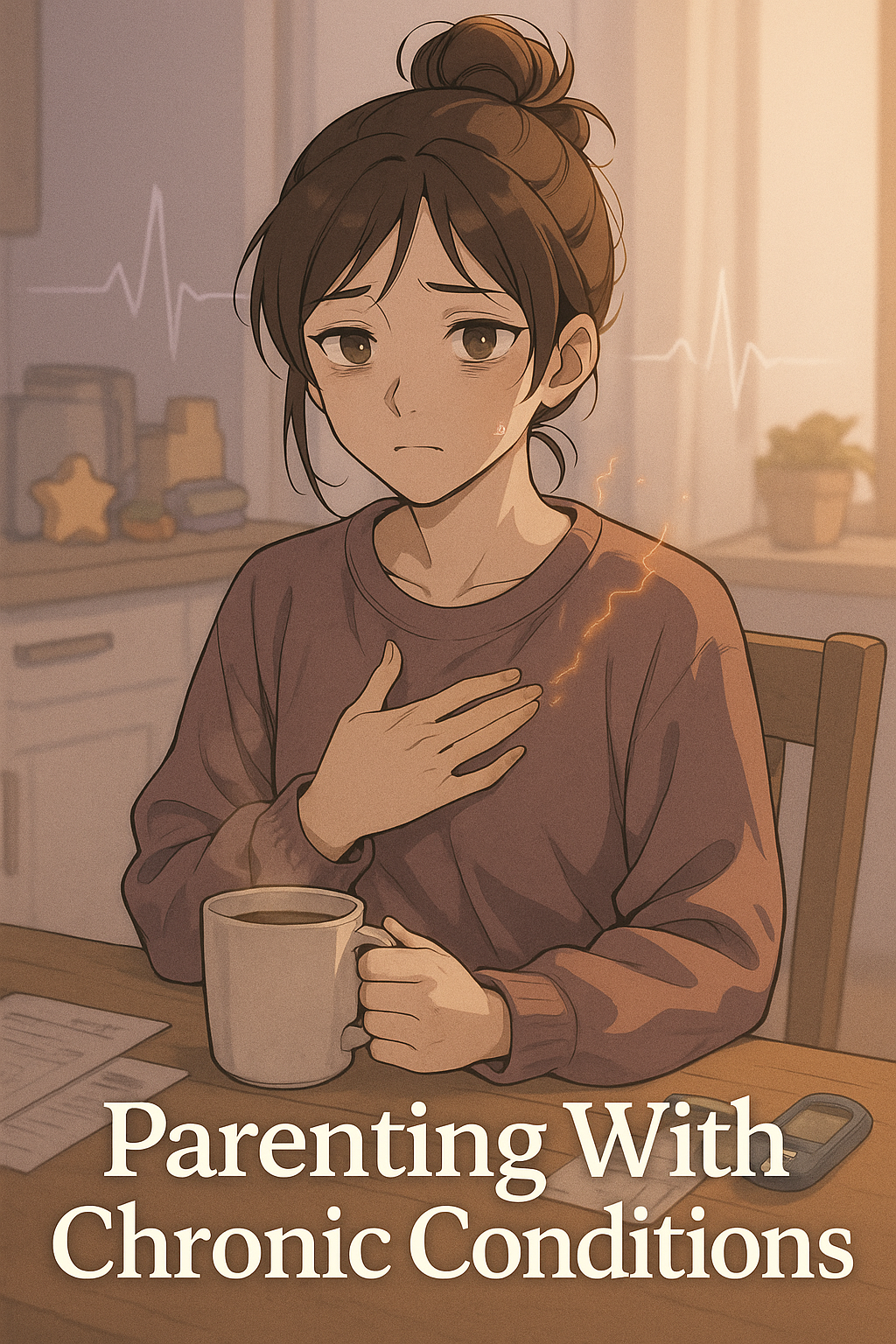
  • Parenting With Chronic Conditions: How I Survive the Hard Days Without Falling Apart

    Parenting With Chronic Conditions: How I Survive the Hard Days Without Falling Apart

    Trigger Warning:

    This post talks about chronic symptoms, stress, anxiety, and the struggles of parenting while unwell.

    Disclaimer:

    I’m not a medical professional. This post shares personal experiences and tips that help me. Always talk to your doctor before making changes to your health routine.

    Let me just say it straight:
    Trying to parent while dealing with chronic conditions should count as an Olympic sport.
    I swear I’d have a gold medal by now, probably two.

    Because it’s not just being tired or having a bad day.
    It’s waking up with a tight chest, a blood sugar rollercoaster, a head that feels too heavy, and still hearing,
    “Mom, what’s for breakfast?”
    before your eyes even fully open.

    And somehow… you keep going.

    Not because it’s easy, but because there’s literally no other choice.


    The Invisible Battle Nobody Sees

    If you know, you know.

    People see you grocery shopping with kids like,
    “Oh wow, you’ve got your hands full!”
    and you smile, but inside you’re thinking:

    “If only you knew I’m low-key trying not to pass out in aisle five while also calculating carbs for dinner and praying this weird shoulder pinch isn’t something fatal.”

    It’s wild — the amount of mental gymnastics you do just to keep life moving.

    And the worst part?
    Most of it is silent.
    Invisible.
    Hidden under that “I’m fine” shield we’ve learned to wear because telling the truth feels like too much explaining.


    The Mental Load Hits Harder Than the Symptoms

    Let’s be honest — anxiety loves to join the party.
    It’s like your chronic condition says, “Let me cause a little chaos,”
    and anxiety comes in behind it like,
    “Bet. I’ll make it ten times worse.”

    And suddenly a little chest ache isn’t “just a chest ache.”
    It’s your brain whispering,
    “What if…?”
    until your whole nervous system goes into witness protection mode.

    Meanwhile your kids are arguing about who stole whose snack, someone’s tablet is dead, someone else is hungry again, and you’re trying to breathe through it like a monk even though your heart is doing jumping jacks.

    It’s A LOT.
    And yet—you keep showing up.

    Every. Single. Day.


    What Actually Helps (and doesn’t make me want to scream)

    Listen. I’m not here to pretend I have a perfectly color-coded routine with mason jars and yoga mats.
    This is what real survival looks like for me:

    💜 Micro-rests.

    Five minutes. In silence.
    Sometimes on the floor, the bathroom, the car—whatever.
    It resets my whole nervous system.

    💜 Simplifying breakfast.

    My body does MUCH better without a sugar bomb first thing in the morning.
    Eggs, oatmeal, and yogurt — my holy trinity.

    💜 Hydration first, fear later.

    I drink water and take my meds before letting my anxiety scroll through imaginary symptoms.

    💜 “Couch school.”

    Yes, we homeschool from the couch sometimes.
    Documentaries. Reading. Drawing.
    Learning doesn’t stop just because my body said, “Girl, sit down.”

    💜 Not pretending to be superwoman.

    If I need help?
    I take it.
    Is dinner easy?
    It’s easy.
    Rotisserie chicken has saved more families than therapy, honestly.


    One Thing I Wish More People Understood

    Parenting with chronic conditions isn’t weakness.
    It’s grit.
    It’s resilience.
    It’s the kind of strength that doesn’t look pretty—it looks tired and shaky and still trying.

    The kind of strength that sits through symptoms, fear, and fatigue…
    and still gets up to comfort a crying kid at 3 AM.

    The kind that keeps showing up even when your body is begging for a timeout.

    You don’t get enough credit for that.
    None of us do.


    A Little Story I Don’t Tell Often

    There was one day — not even that long ago — when my symptoms scared me so bad I had to sit on the edge of the bed just to steady my breathing.
    My chest felt tight, my anxiety was loud, and I swore something was wrong.

    And right in the middle of that moment, my child walked in and said,
    “Mom, can you help me with this?”
    Holding homework.

    And somehow, even while terrified, I helped.
    My hands were shaking, but I helped.

    Later that night, I realized something:
    Our kids don’t need the healthiest version of us.
    They need the present version of us.
    The trying version.
    The “I’m still here even though today was heavy” version.

    And that version—you—is already enough.


    If You’re Doing This Too, Here’s What I Want You to Know

    You’re not dramatic.
    You’re not weak.
    You’re not failing.
    You’re navigating life with an extra layer of difficulty that most people will never understand.

    And you’re still raising a family.
    Still showing up.
    Still trying to heal.
    Still fighting for better days.

    That’s strength most people won’t ever have.


    Parenting with chronic conditions doesn’t make you less.
    It makes you dangerous — in the best way.
    Because anyone who can survive their own body and raise kids is built different.

    Soft mic-drop. 💜

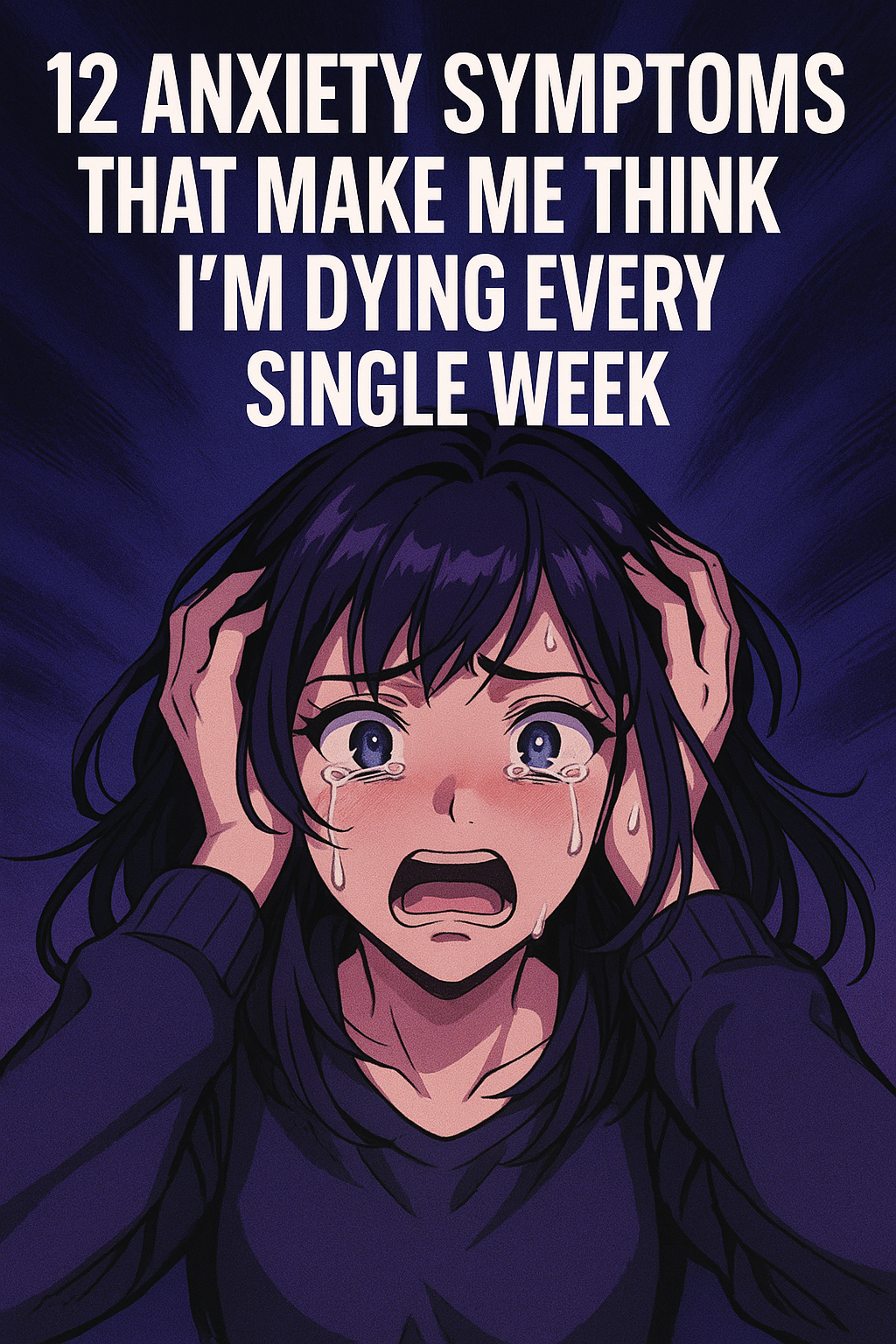
  • 12 Anxiety Symptoms That Make Me Think I’m Dying Every Single Week

    12 Anxiety Symptoms That Make Me Think I’m Dying Every Single Week

    Trigger Warning:

    This post talks about anxiety symptoms, health anxiety, panic spirals, and physical sensations that may be triggering for sensitive readers. Please read gently and take breaks if needed.

    Disclaimer:

    I am not a medical professional, therapist, or clinician. I am simply sharing my personal experience living with anxiety, panic, and a very dramatic nervous system that thinks everything is an emergency. This blog is for storytelling and community — not medical advice. If you ever have true concerns about your health, always reach out to your healthcare provider.

    Listen.
    There’s “normal anxiety,” and then there’s MY anxiety the type that wakes up every morning like:

    “Good morning, queen. Here’s a brand-new symptom for you to overthink.”

    If you know, you know.

    One day it’s my chest.
    The next day it’s my head.
    The day after that, my stomach is doing backflips like it’s auditioning for the Olympics.

    And the wild part?
    I STILL manage work, kids, bills, homeschooling, errands, and pretending like I’m not having a meltdown in aisle 7 of Walmart.

    If you’ve been around my blog for a minute, you already know this is the same nervous system that inspired posts like:
    👉 4 Simple Shifts That Make Stress Easier to Handle
    and
    👉 Building a Toolbox Against Anxiety Inside My Calm Vault

    But today?
    No toolbox.
    No shifts.
    No self-help.
    Just me being honest about the stuff anxiety puts me through weekly the symptoms that convince me I’m dying even though I never do.

    So let’s get into this circus.


    1. The Random Chest Twinge™

    A tiny pinch. Literally half a second.
    My brain: “Pack your bags. This is it.”
    Reality: I twisted wrong, breathed wrong, or moved like a 30-something mom who slept weird.


    2. The Heart Glitch

    That one dramatic thump?
    That little BLIP out of nowhere?
    Yep. Heart attack.
    Except it’s always: anxiety + caffeine + me existing.


    3. The Head Pressure That Feels Like a Storm

    You ever feel like a cloud sits on one spot of your skull?
    Anxiety loves that spot.
    It’s always one weird area too — like the center, the top, the left corner. Always making me think something is exploding.


    4. The Shoulder Blade Pain From Hell

    Is it tension?
    Is it posture?
    Is it me cracking my neck like a glow stick?
    My anxiety does not care. It says: internal organ failure, babe.


    5. The Stomach Flip That Feels Fatal

    My stomach: rumble
    Me: “I’m DEAD.”
    Genuinely 80% of the time it’s gas. The other 20% is stress. But does my brain calm down? Absolutely not.


    6. The Warm Rush Through My Body

    The “my soul is leaving my body” sensation.
    You know the one.
    Anxiety loves to send a heatwave from nowhere just to keep the drama alive.


    7. The Jaw Tightness of Doom

    I clench my jaw all day like I’m fighting demons.
    Then panic when it hurts.
    Like yes girl… your jaw is tired. Let her live.


    8. The Numb Leg That MUST Be a Blood Clot

    Sat wrong?
    Circulation cut off?
    Blood flow delayed because I’m sitting like a pretzel on the couch?
    Doesn’t matter. My brain says: medical emergency.


    9. The Random Throat Tightness

    Talking normal, breathing normal, eating normal…
    Throat: Let’s freak her out real quick.
    Me: Googling things I should NOT be googling.


    10. The Sharp Side Pain That Makes Me Plan My Funeral

    One sharp pain = my brain writing my obituary.
    Even though it’s a plot twist, it usually hurts more when I move, which is the biggest sign it’s NOT serious.


    11. The Random Heart Racing For No Reason

    Nothing happening.
    Just sitting.
    Heart said, “135”
    Anxiety said, “RUN.”
    Reality said, “Sit down, please.”


    12. The “Something Feels Off” Mystery Symptom

    The most disrespectful one.
    No location.
    No definition.
    Just vibes.
    And those vibes usually have me calling on Jesus because… WHY.

    Every week I think “THIS is the one that’s going to kill me,” and every week… I’m still here. Still panicking. Still laughing. Still surviving. And honestly? That’s what makes anxiety moms some of the strongest women I know.

    If anxiety were a subscription service, I’d cancel it and block the company. The symptoms are dramatic and unnecessary and come with no warning period. 0/10. Do not recommend.

  • 5 Thanksgiving Triggers That Quietly Make Your Anxiety Worse

    5 Thanksgiving Triggers That Quietly Make Your Anxiety Worse

    Trigger Warning: Anxiety, holiday stress

    Disclaimer:
    I’m not a medical professional, therapist, or mental health provider. I share my personal experiences with anxiety for education and support only. This post is not medical advice, diagnosis, or treatment. Always talk to your doctor or healthcare provider about your own symptoms, questions, or health concerns.


    Thanksgiving looks warm and peaceful on Instagram… but let’s be honest: sometimes the holidays feel like a slow-moving anxiety tornado.

    One minute you’re doing fine, and the next your heart is racing because someone asked you to grab one more thing from the grocery store, and Walmart looks like a battlefield.
    Been there, survived it, and slightly traumatized.

    A lot of the things that make us spiral aren’t obvious.
    Let’s talk about 5 hidden Thanksgiving triggers that quietly crank up your anxiety and how to stay grounded through them.

    If you want extra support with stress, check out my post 4 Simple Shifts That Make Stress Easier to Handle when you’re done reading this.


    1. The Mental Load of “Getting Everything Ready”

    Thanksgiving isn’t one day; it’s a whole damn operation.

    You’re juggling:

    • grocery lists
    • cooking plans
    • cleaning
    • family schedules
    • kids
    • timing
    • a hundred tiny tasks nobody appreciates

    Your mind is constantly whispering,
    “You’re forgetting something.”

    This invisible pressure builds up and turns into anxiety long before the holiday even starts.


    2. Crowded Stores + Overstimulation From Rushing

    Walmart, Sam’s Club, Costco…
    They transform into stress Olympics the week of Thanksgiving.

    The noise.
    The energy.
    The rushing.
    The carts hitting your heels.
    People breathing on your neck in the checkout line.

    Your nervous system gets overwhelmed FAST and your body reacts as if danger is nearby, even though you’re literally just trying to grab cinnamon.


    3. Family Energy + Unspoken Expectations

    Let’s be real:
    Family dynamics can trigger anxiety more than anything on the menu.

    Even the “good” relatives can drain you without trying:

    • loud talking
    • tension
    • judgmental comments
    • pressure to socialize
    • old memories
    • emotional expectations

    Your body picks up the entire vibe before your brain even catches up.

    Sometimes you’re not anxious because of something happening you’re anxious because of the energy in the room.


    4. Food Anxiety Especially if You Have Health Anxiety

    When you deal with health anxiety, Thanksgiving food hits different.

    Thoughts like:

    • “Will this spike my sugar?”
    • “What if my stomach reacts?”
    • “Will this make my symptoms flare up?”
    • “What if I feel sick later?”

    Your brain starts analyzing every forkful instead of just… enjoying it.

    And that constant self-monitoring wears you out.


    5. The Pressure to Be “Fine” for the Holiday

    THIS ONE.
    This is the silent trigger nobody talks about.

    Trying to:

    • be cheerful
    • mask your symptoms
    • not cause a scene
    • not ruin the vibe
    • look okay in family photos
    • handle everything without breaking down

    It’s EXHAUSTING.

    The pressure to pretend you’re okay is often worse than the anxiety itself.


    How to Protect Your Peace This Thanksgiving

    Here’s what helps me keep my sanity:

    Break tasks into smaller steps
    You don’t have to run Thanksgiving like a catering company.

    Take quiet breaks
    Bathroom. Car. Outside. Do what you need.

    Eat slowly and hydrate
    Helps keep both anxiety and physical symptoms calm.

    Release the pressure to be perfect
    You’re not a holiday hostess robot.

    Remember:
    You’re not ungrateful you’re overwhelmed.
    And overwhelmed people deserve grace, too.


    A Final Word From Me to You

    If your anxiety has been creeping in lately…
    If your chest feels tight…
    If your heart is doing the most…
    Or if the thought of Thanksgiving makes your nerves jump…

    You are NOT alone.

    Your anxiety doesn’t make you dramatic.
    It doesn’t make you weak.
    It doesn’t make you ungrateful.

    It makes you human.

    And humans deserve compassion especially around the holidays.

    💜 With love, honesty, and zero judgment,
    Shanice — Anxiety Momster

  • How to Stop a Panic Attack: A Compassionate, Research-Backed Guide

    How to Stop a Panic Attack: A Compassionate, Research-Backed Guide

    ⚠️ Trigger Warning

    This post discusses panic attacks and their physical and emotional symptoms. Some readers may find this topic distressing.
    If you’re currently feeling very anxious or overwhelmed, it’s okay to pause here, breathe, and come back when you feel ready.


    🩺 Disclaimer

    This content is for educational and informational purposes only. It does not replace professional diagnosis, treatment, or medical advice.
    If you experience a panic attack for the first time, have chest pain, difficulty breathing, fainting, or fear you may harm yourself — seek emergency medical care (call 911 in the U.S.) or go to your nearest emergency department.

    If you’ve ever found yourself in the middle of a panic attack — heart racing, breath shallow, mind spinning — you are not alone.
    Millions of people search for “How do I stop a panic attack?” every year because it can feel like everything is spiraling out of control.

    But here’s the truth: you can regain control, and there are real, proven tools to help. Let’s walk through what’s happening inside your body, what to do in the moment, and how to prevent future attacks — all grounded in facts, not fear.


    What’s Actually Happening During a Panic Attack

    Understanding what’s going on in your body can help calm the fear of the unknown.

    • A panic attack is a sudden surge of intense fear or discomfort that peaks within minutes and includes both physical and emotional symptoms.
      Healthline
    • Common symptoms include: racing heart, sweating, trembling, shortness of breath, chest pain, nausea, dizziness, chills or hot flashes, and a sense of detachment or doom.
      McLean Hospital
    • It’s your body’s “fight-or-flight” response misfiring — releasing adrenaline when there’s no real threat.
    • While terrifying, panic attacks are not dangerous for most people and will pass on their own.
      Harvard Health
    • With practice, therapy, and support, you can significantly reduce their frequency and intensity.
      National Library of Medicine

    What to Do During a Panic Attack

    Here’s a simple, science-supported roadmap to ride out the wave instead of fighting it.

    1. Acknowledge What’s Happening

    Tell yourself:

    “I’m having a panic attack. This is temporary. I am safe.”

    Recognizing it for what it is reduces the secondary fear that fuels the episode.
    Cleveland Clinic


    2. Slow Your Breathing

    Practice slow, deep belly breathing:

    • Inhale through your nose for 4 seconds
    • Hold for 1 second
    • Exhale through your mouth for 8 seconds

    Repeat until your heartbeat starts to settle.
    Medical News Today


    3. Ground Yourself in the Present

    Use the 5-4-3-2-1 method:

    • 5 things you can see
    • 4 things you can touch
    • 3 things you can hear
    • 2 things you can smell
    • 1 thing you can taste

    This technique pulls your mind out of fear and into the now.


    4. Release Muscle Tension

    Try progressive muscle relaxation: tense a muscle group for 5 seconds, then release for 10 seconds. Move through your body from head to toe.
    Medical News Today


    5. Remind Yourself: It Will Pass

    A panic attack usually peaks within 10 minutes. Imagine it as a wave that rises, crests, and fades.
    Medical News Today


    6. Shift to a Calmer Space (if possible)

    If you can, move somewhere quieter, sit down, close your eyes, or step outside for fresh air.
    Medical News Today


    7. Ask for Support

    If you’re with someone you trust, simply say:

    “I’m having a panic attack. Please stay with me.”

    Connection can lessen fear.
    Healthline


    After the Attack: What to Do Next

    Once the wave has passed, your nervous system needs recovery time. Try these next steps:

    • Reflect on what happened. What might have triggered it? What helped?
    • Log it in your Calm Vault Tracker Tool.
      You already have access to this inside the Calm Vault, it’s a safe space to track your anxiety patterns, triggers, and progress.
      You don’t have to write everything down right away, but taking a quick note later helps you see growth over time.
      👉 If you haven’t yet, take a peek at the Calm Vault; it includes a free tracker you can download and start using today.
    • Practice your tools regularly. Breathing and grounding work best when they become muscle memory.
    • Support your body:
      • Prioritize sleep, hydration, and movement.
      • Limit caffeine, alcohol, and nicotine (all can intensify anxiety).
      • Mayo Clinic
    • Consider professional help if panic attacks are frequent or disruptive Cognitive Behavioral Therapy (CBT) is highly effective.
      Healthline

    🪷 Quick Reference Card

    When a Panic Attack Starts:

    • “This is panic, not a heart attack. I am safe.”
    • Inhale 4 seconds → Exhale 8 seconds.
    • 5-4-3-2-1 grounding.
    • Relax your shoulders, unclench your jaw, and drop your tongue from the roof of your mouth.
    • Use your Calm Vault Tracker afterward to record what happened.

    💬 Final Thoughts

    Panic attacks may feel uncontrollable, but they are survivable and manageable.
    Each time you face one, breathe through it, and log it, you’re teaching your brain that you can handle it.

    You are stronger than your symptoms, and you have tools (like your Calm Vault Tracker) to prove it.
    Remember: healing doesn’t mean you never panic again; it means panic no longer controls you.

    You’ve got this. 💜

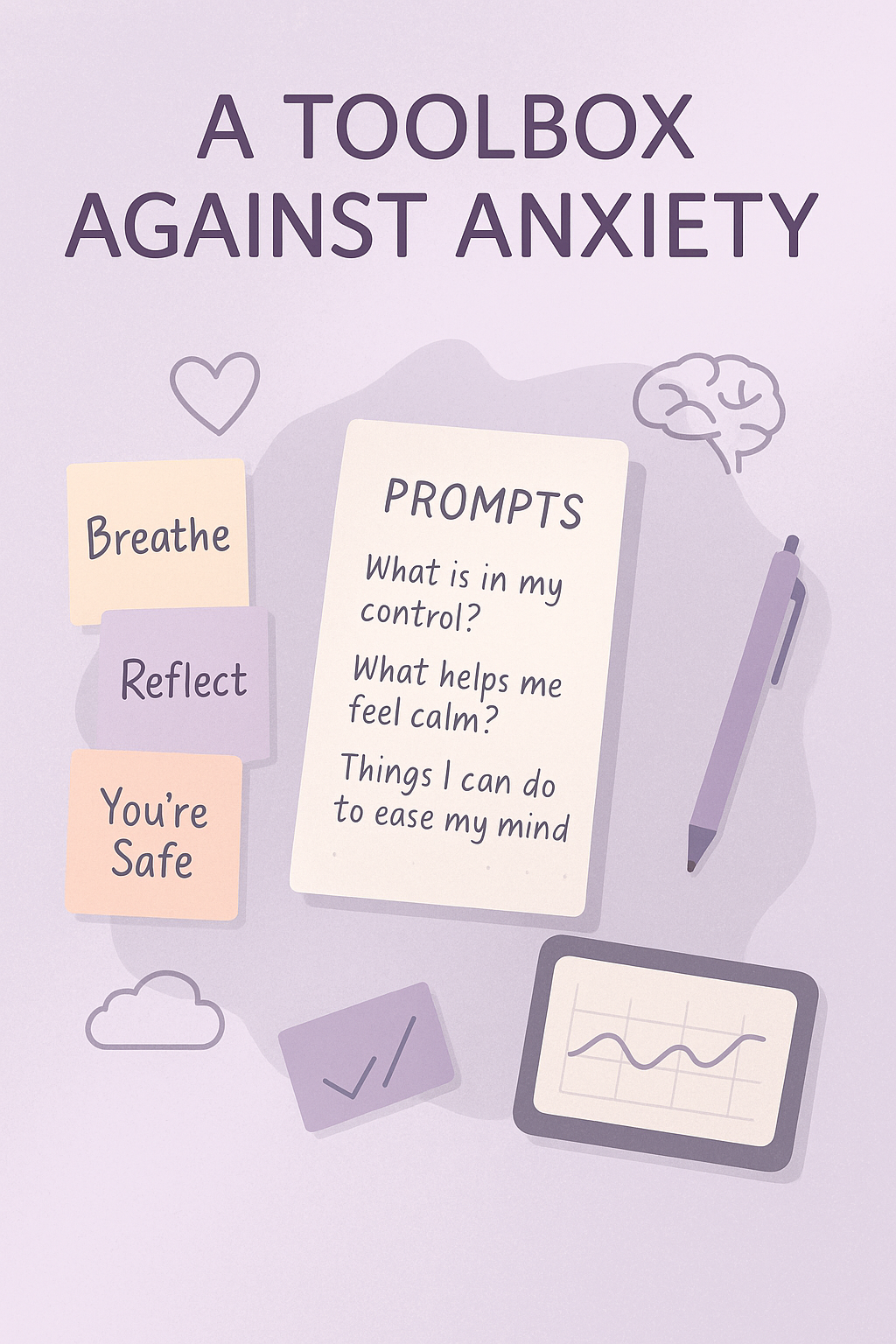
  • Building a Toolbox Against Anxiety (Inside My Calm Vault)

    Building a Toolbox Against Anxiety (Inside My Calm Vault)

    ⚠️ Trigger Warning: This post discusses anxiety, panic, and coping strategies.

    📌 Disclaimer: I am not a medical professional. Everything here is based on my lived experience and supported by trusted resources. Please seek guidance from a licensed professional for your own health needs.

    Anxiety doesn’t wait for a quiet moment. It barges in — at work, during family time, or when I just want to rest. For a long time, I felt like I was fighting empty-handed, scrambling for relief in the middle of panic.

    That’s when I started building my own toolbox against anxiety. Not random tips I might forget in the heat of the moment, but real tools I could grab instantly — journals, forms, trackers, and even games.

    And now I keep them all together in one space: my Calm Vault.


    Why You Need an Anxiety Toolbox

    When your chest is tight or your thoughts won’t stop, it’s hard to think clearly. Having tools ready ahead of time means you don’t have to rely on willpower alone. You can open your toolbox and choose what helps in that moment — whether it’s journaling, logging, or distracting yourself with something calming.

    According to the Anxiety & Depression Association of America, anxiety is the most common mental health condition, affecting over 40 million U.S. adults [ADAA]. Symptoms can show up in your body (racing heart, dizziness, stomach upset) before your mind even feels stressed. Having tools on hand helps interrupt that cycle.


    What’s Inside My Calm Vault

    Here’s what you’ll find right now (and I keep adding new things regularly):

    • 🫁 Breathe With Me – Printable Journal
      A soft, gentle space to brain dump, reset, and breathe when anxiety gets loud.
    • 🖊️ You vs. Anxiety: Building from the Inside Out (Printable Workbook)
      A printable workbook to track symptoms, reflect on triggers, and rebuild your peace step by step.
    • 📓 Breathe With Me Guided Journal (Canva Template)
      This one’s my favorite a guided journal you can customize in Canva. Don’t worry your copy is completely private once you click “Use template.”
    • 🧠 Free Canva Prompt Template – “My Anxiety Was Loud, But I Still…”
      A simple reflection page that helps you notice the wins you do have, even when anxiety is heavy.
    • 🌬️ Breathe + Log Form (Guided Form)
      For in-the-moment anxiety. Fill it out when panic rises, and it walks you through pausing, breathing, and reflecting.
    • 📊 Breathe + Log Tracker (Google Sheet)
      This goes with the form all your entries collect here so you can see patterns, triggers, and progress over time.
    • 🎮 Gaming Center (Mini Games)
      Because sometimes, you just need a light distraction. I added calming, low-stress mini games to give your brain a break.

    🔄 And I’m still adding more: panic kits, grounding cards, and even full digital planners.


    How I Use My Calm Vault in Real Life

    • When I feel panic coming on at work → I open the Breathe + Log Form and let it guide me through.
    • On rough weeks → I grab the You vs. Anxiety workbook to track patterns I can’t see in the moment.
    • When my mind won’t stop racing → I open the Breathe With Me guided journal and let it walk me through calming down.
    • When I just need distraction → I open the Gaming Center and play a quick mini game until the wave passes.

    Final Thoughts

    Anxiety might always be part of my life but it doesn’t get to run the show anymore. The Calm Vault is my toolbox. My safe place. My collection of reminders that even on the hardest days, I’m not empty-handed.

    And it’s not just for me anymore; it’s for you, too.

    👉 Grab access to my Calm Vault here: Anxiety Momster Calm Vault

    Because peace isn’t about pretending you don’t have anxiety it’s about having tools ready for when it shows up.

  • Why Does Anxiety Show Up in My Body But Not My Mind?

    Why Does Anxiety Show Up in My Body But Not My Mind?

    ⚠️ Trigger Warning: This post discusses anxiety, panic attacks, and physical symptoms that may be sensitive for some readers.

    📌 Disclaimer: I am not a medical professional. Everything shared here combines my personal experience with facts from trusted sources. Please seek medical advice from a licensed professional for your own health concerns.

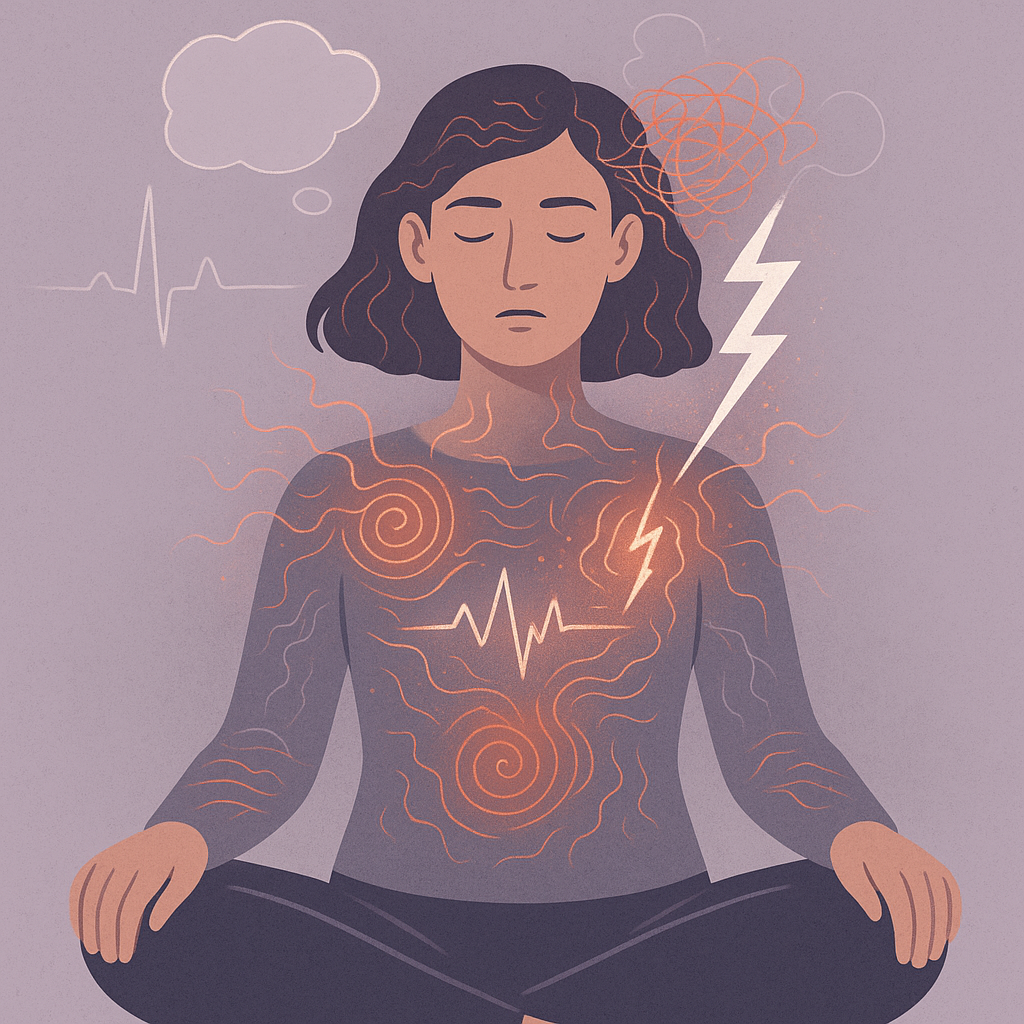
    One of the most confusing things about anxiety is when your body feels it, but your brain doesn’t. You’re not sitting there panicking. You’re not even thinking scary thoughts. Yet suddenly your chest feels tight, your jaw aches, your heart races, or your stomach flips.

    That’s when the spiral starts: “If I’m not panicking in my head, then this has to be something dangerous, right?”
    I’ve been there more times than I can count.

    I wrote about something similar in “Can You Have a Panic Attack Without Feeling Panicked?” and it turns out, you can. Anxiety doesn’t always look like the movie version of someone hyperventilating with shaking hands. Sometimes, it’s quiet in your head but loud in your body.


    The Science Behind It (Facts First)

    Anxiety doesn’t always start in your thoughts sometimes it shows up in your body first. Here’s why:

    • Fight-or-Flight Response: Even if you don’t feel panicked, your body may detect stress signals (like blood sugar changes, hormones, or muscle tension) and release adrenaline. This causes chest tightness, fast heartbeat, or shaky muscles Harvard Health Publishing.
    • Subconscious Stress: The nervous system can stay activated below your conscious awareness. Studies on stress physiology show the body may remain in “high alert mode” even when you don’t feel mentally stressed American Psychological Association.
    • Physical Symptoms Without Mental Panic: Research published in Dialogues in Clinical Neuroscience explains that anxiety often triggers physical symptoms — gastrointestinal upset, headaches, muscle pain, palpitations — even when people don’t report feeling anxiousDialogues Clin Neurosci, 2002.

    So yes: your body can sound the alarm even when your mind is calm.


    How This Looks in My Life

    For me, it happens like this:

    • I’ll be sitting at work, not even thinking about anxiety, when suddenly my chest feels tender.
    • I’ll be playing with my kids at the park, completely fine mentally, when jaw pain or shoulder tightness shows up out of nowhere.
    • I’ll wake up in the middle of the night, heart pounding, even though I wasn’t dreaming anything scary.

    And of course — my anxious brain kicks in after the fact, whispering: “What if this isn’t anxiety?”


    Why It Happens (The Bridge Between Mind + Body)

    Think of your mind and body as being on the same highway. Sometimes traffic starts at the “thought” exit (worry, what-ifs) and then spills into your body (heart racing, muscle tension). Other times, it’s reversed your body hits the gas first, and your brain catches up later.

    This doesn’t mean you’re “broken” or missing signs. It means your nervous system is hypersensitive, reacting before you even notice.


    How I Cope When My Body Freaks Out but My Mind Is Calm

    Here are a few things I do when anxiety shows up in my body first:

    • Remind myself it’s common. I literally say: “This is anxiety in my body, not danger.”
    • Grounding techniques. I feel my feet on the floor, touch something textured, or name five things I see.
    • Stretching and moving. If my chest or shoulders hurt, stretching helps prove to me it’s tension, not something fatal.
    • Check the pattern. I look back—this symptom has come and gone before. It’s frustrating, but not new.

    I also opened up more about my experience in “Unmedicated but Anxious: My Honest Truth”. That post dives into what it’s like navigating anxiety without depending fully on medication and why these body-first symptoms still show up anyway.


    Final Takeaway

    Yes, anxiety can show up in your body even when your mind feels calm. It’s not a trick, and it’s not you “imagining things.” It’s your nervous system working overtime and it’s been studied and documented.

    You’re not alone, you’re not broken, and your body isn’t betraying you. It’s just anxiety showing up in a different doorway.

    And here’s the truth I remind myself daily: just because my body screams doesn’t mean I’m in danger.

  • Anxiety vs. Heart Attack: The Facts I Read When I Think It’s Fatal

    Anxiety vs. Heart Attack: The Facts I Read When I Think It’s Fatal

    Trigger Warning: This post discusses health anxiety, chest pain, and heart attack fears. Please take care of yourself while reading.

    Disclaimer: I am not a doctor. This is my personal experience living with anxiety. Nothing here is medical advice if you ever feel you are in danger, seek professional medical help immediately.


    When Anxiety Feels Like a Heart Attack

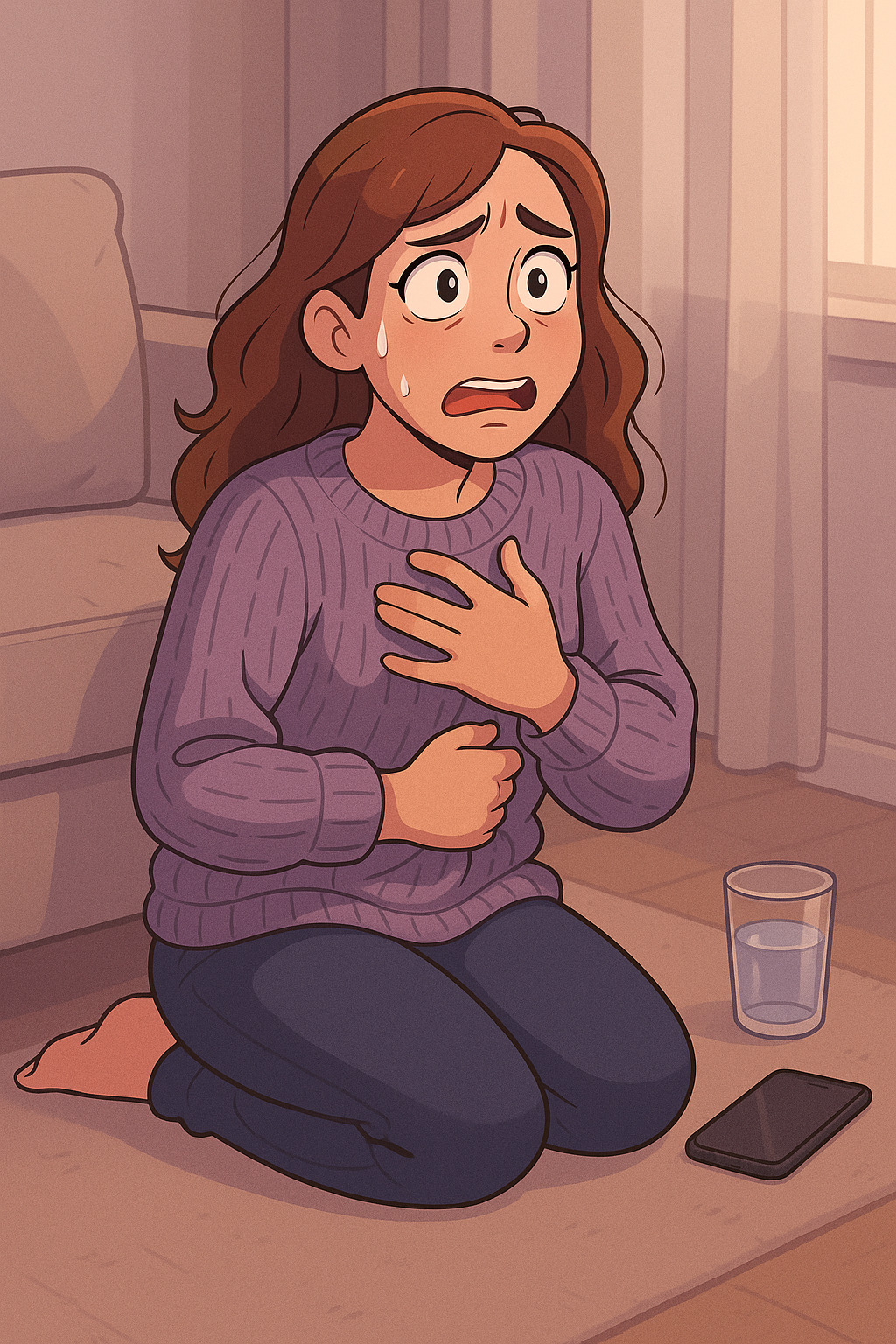
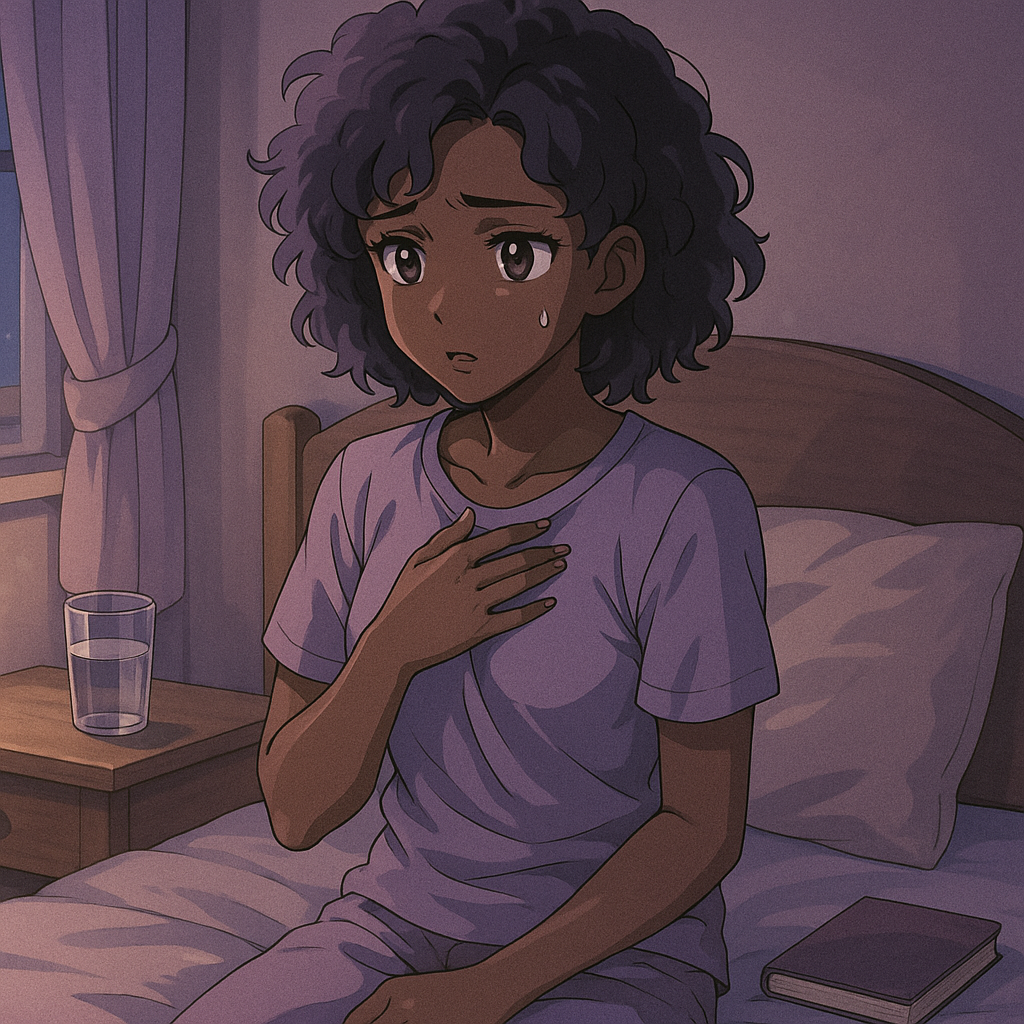
    There have been nights where I sat clutching my chest, convinced that any second would be my last. The pain was sharp, the fear was louder, and no amount of logic could convince me otherwise: “This has to be a heart attack.”

    Living with health anxiety means that every ache, every flutter, every breath feels like a warning sign. For me, the scariest spiral always starts in my chest.

    I’ve had moments of:

    • Sudden chest tightness that feels like my body is collapsing in on itself
    • A weird ache in my jaw or shoulder that makes me panic even more
    • Shortness of breath that’s really just me forgetting how to breathe normally
    • A racing heart that spikes out of nowhere and convinces me it’s all over

    And yet every single time I’ve made it through. Because what I was feeling wasn’t a heart attack… it was anxiety.


    Why Anxiety Mimics Heart Attack Symptoms

    Anxiety activates your body’s fight-or-flight response. Adrenaline floods your system. Muscles tighten. Breathing changes. Your heart pounds faster to “protect” you from danger — except the danger is just a thought.

    Here’s how anxiety tricks me (and maybe you too):

    • Chest Pain/Tightness → Anxiety causes muscle tension in your chest wall, making the pain feel real and scary.
    • Jaw or Shoulder Pain → Clenching from stress can radiate into these areas.
    • Shortness of Breath → Shallow breathing during panic makes you feel suffocated.
    • Heart Racing → Adrenaline surges send your pulse soaring, even if your heart is healthy.

    The overlap is cruel, because these are also signs of a heart attack. That’s why anxiety feels so believable.


    What I Remind Myself in the Middle of Panic

    Over time, I’ve built a little script in my head facts I repeat when my anxiety screams “heart attack.”

    • If the pain changes when I move, stretch, or press on it → it’s usually muscle, not my heart.
    • If it comes and goes in waves instead of staying crushing and constant → it’s more likely anxiety.
    • If deep breaths or grounding calm it down → that’s nerves, not blocked arteries.
    • If I’ve had this same symptom before and survived → it’s reassurance, not danger.

    These reminders don’t erase the fear instantly, but they keep me from spiraling into full-blown panic.


    How I Cope in the Moment

    When I’m in the middle of an anxiety spiral, here’s what helps me:

    1. Slow Breathing: Inhale for 4, hold for 4, exhale for 6. It helps reset my racing heart.
    2. Grounding: I press my hand to my chest and remind myself: this is tension, not danger.
    3. Movement: Stretching my shoulders and jaw often makes the “heart pain” fade.
    4. Distraction: Journaling, sipping water, or writing down what I’m feeling pulls me out of the fear loop.
    5. My Trackers: Logging symptoms helps me see patterns — proof that I’ve been through this before and survived.

    The Reassurance I Keep Coming Back To

    The scariest part of health anxiety is the “what if.” What if this time it’s not anxiety? What if I don’t make it?

    But here’s the truth: anxiety has never killed me. It just feels like it will.

    Every spike, every ache, every “this has to be it” moment has passed. My body has always corrected itself. The fear fades, my heart rate slows, and I’m left with proof that it was panic not a heart attack.


    If You’re Reading This While Panicking…

    Take a slow breath with me right now.
    Put your hand on your chest.
    Say this out loud:

    “This is my anxiety lying to me. My body knows how to calm down. I am safe.”

    You are not alone in this. I’ve been there more times than I can count. And every time, the anxiety eventually loosened its grip. Yours will too.


    This is just my personal experience, but maybe it helps you feel less alone. Anxiety is sneaky, cruel, and exhausting but it is not the end.

    If you want more tools to cope, I share free trackers and journals that help me manage spirals and see my progress over time. You can grab them here.

    You don’t have to go through this fight alone.

  • Feeling Like You’re Going Crazy? It Might Just Be Anxiety

    Feeling Like You’re Going Crazy? It Might Just Be Anxiety

    ⚠ Trigger Warning: This post discusses anxiety, intrusive thoughts, and mental health symptoms.
    Disclaimer: I’m not a medical professional. This is based on my personal experience with anxiety. Please seek professional advice if you’re struggling or unsure about your symptoms.

    Have you ever had that moment where your heart is pounding, your mind is racing, and you think:
    “I’m losing my mind. Something is seriously wrong with me.”

    I’ve been there — more times than I can count. And every single time, it felt so real.

    But here’s what I’ve learned through living with anxiety and panic attacks: Feeling like you’re going crazy doesn’t mean you actually are.


    Why Anxiety Can Make You Feel Like You’re Losing Control

    When anxiety spikes, it’s not just an emotional feeling — it’s a physical, full-body alarm system. Your brain senses a threat (even if there isn’t one) and kicks your nervous system into fight-or-flight mode.

    That response can cause:

    • Racing thoughts or intrusive thoughts
    • A sense of unreality or detachment (derealization)
    • Difficulty focusing or speaking
    • Feeling like you’re “not yourself”
    • Worry you might snap, faint, or lose touch with reality

    It’s terrifying, but it’s a symptom — not a sign you’re going insane.


    The Science Behind the ‘I’m Going Crazy’ Feeling

    Anxiety overloads your brain with adrenaline, making thoughts race faster than you can process them. At the same time, your body becomes hyper-aware of every sensation. That’s why your mind starts scanning for “proof” that something is wrong.

    Common triggers for this feeling:

    • Adrenaline surge — speeds up thinking until it feels overwhelming
    • Hyper-awareness — makes you notice every breath, heartbeat, or twitch
    • Fight-or-flight mode — convinces your body it’s in danger when it’s not

    This combination creates the perfect storm for thinking: “I’m losing control.”


    How to Ground Yourself When You Feel This Way

    1. Label it: Say to yourself, “This is anxiety, not danger.”
    2. Engage your senses: Try the 5-4-3-2-1 grounding exercise.
    3. Slow your breathing: Inhale for 4, exhale for 6–8.
    4. Shift your focus: Distract your brain with a neutral activity — folding laundry, watching a light show, playing a game.

    Important Reminder

    You are not crazy. You are having a normal human reaction to an overactive nervous system. If you’ve felt this before and came out the other side — you can do it again.

    The fact that you’re aware of your thoughts means you are still grounded in reality. Anxiety can feel powerful, but it’s not more powerful than you.


    💬 Let’s Talk: Have you ever felt like you were losing your mind when it was actually anxiety? Share your story in the comments — it might help someone else feel less alone.

Access calming tools, guided journals, and anxiety support

Get instant access to calming tools, journal prompts, and healing pages created for overwhelmed, overthinking souls — and join the Anxiety Momster newsletter for ongoing support, updates, and mental health resources.

💜 100% free. No pressure. Just peace.

You can unsubscribe anytime. For more details, review our Privacy Policy.